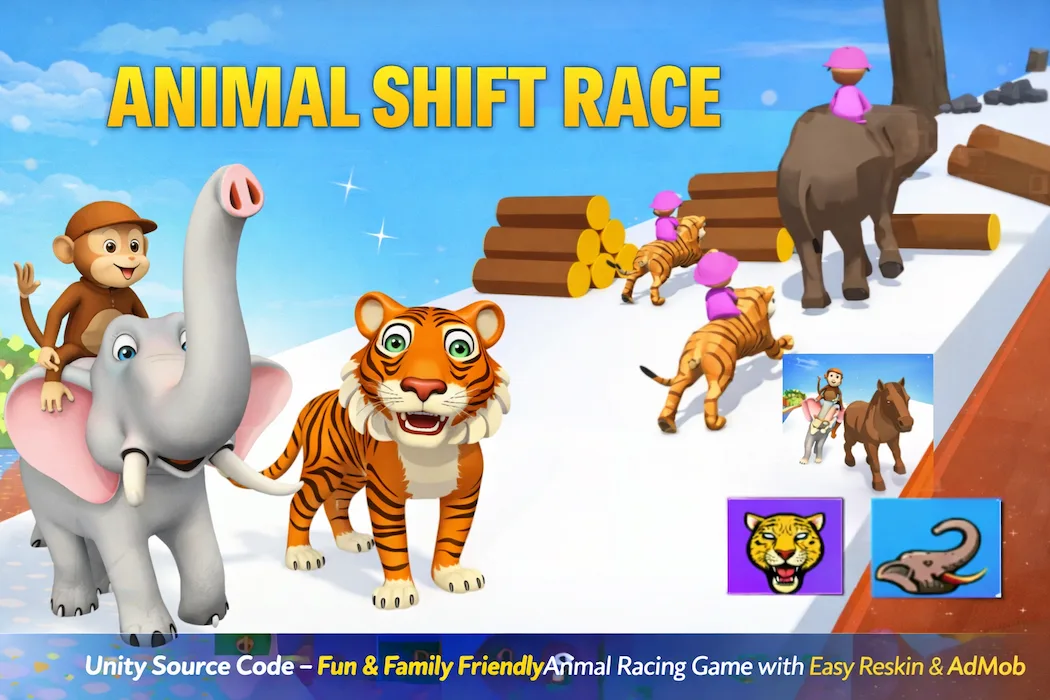

The endless runner genre has been a mobile gaming staple for over a decade — but most runners ask players to do exactly one thing: react fast. Dodge left, dodge right, jump, repeat. Animal Shift Race takes that familiar formula and adds a layer most runners never bother with: decision-making. Instead of simply avoiding obstacles, players constantly shift between different animal forms to match whatever terrain comes next, turning a reflex-only genre into something genuinely strategic.
This is a complete Unity runner game source code built around a shape-shifting mechanic that's simple to explain but surprisingly deep to master. If you're searching for a Unity transform runner template, a mobile endless runner source code, or simply a proven mechanic you can reskin and publish fast, this template gives you a working foundation rather than a blank canvas.
Before diving into the mechanics, it's worth noting why genre innovation like this matters commercially. Generic runners are an oversaturated category — thousands of nearly identical templates compete for the same install base. A runner with a genuine point of differentiation, like the transform mechanic here, has a real shot at standing out in app store search and organic discovery. If you want a deeper breakdown of what separates a genuinely valuable Unity template from a forgettable one, our article on the benefits of using ready-made Unity source code in 2026 covers exactly that distinction.
Standard runners rely entirely on muscle memory — once a player learns the obstacle patterns, the challenge flattens out quickly. Animal Shift Race avoids that problem by tying obstacle survival to an active choice rather than a single reflex action. Every section of the track presents a different type of challenge, which means the skill ceiling stays high far longer than in a typical runner.
This design philosophy — adding a layer of decision-making on top of a familiar mechanic — is one of the most effective ways to extend a game's lifespan without inflating its complexity. It's the same principle behind genre-blending hits across the mobile market, and it's why this template is worth serious consideration if you're trying to publish something that doesn't immediately blend into the crowd of identical runner clones.
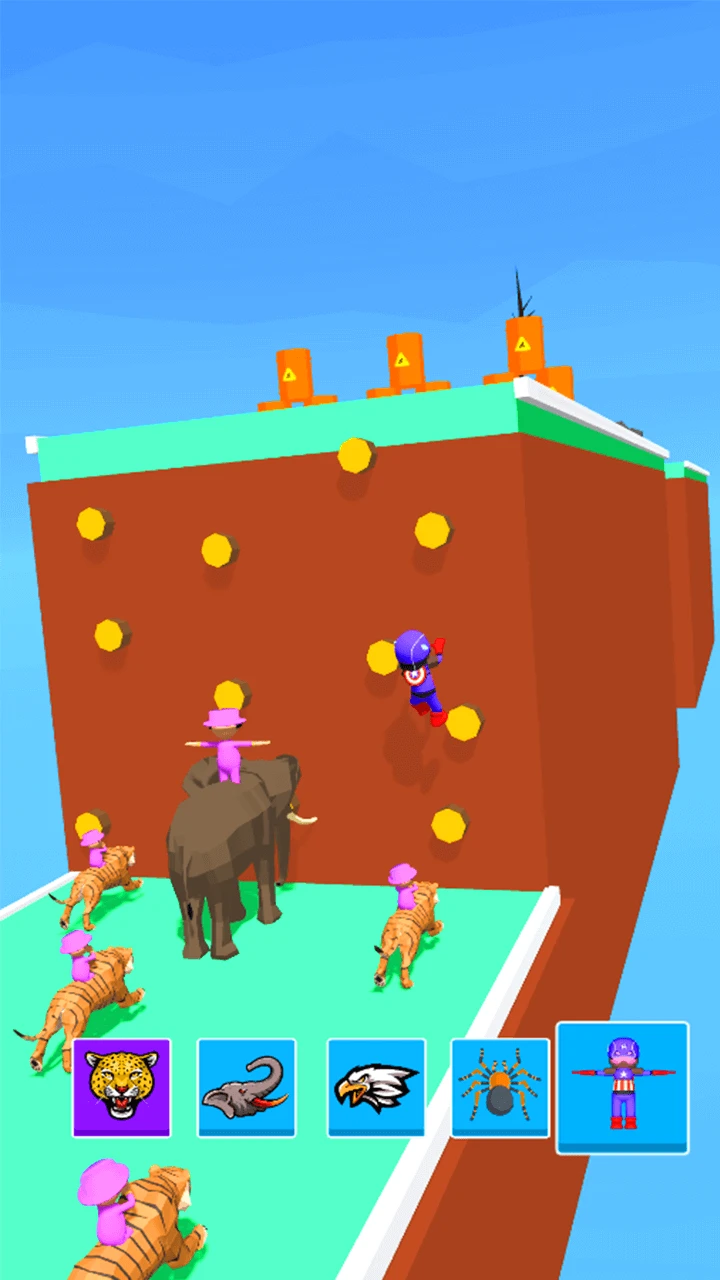
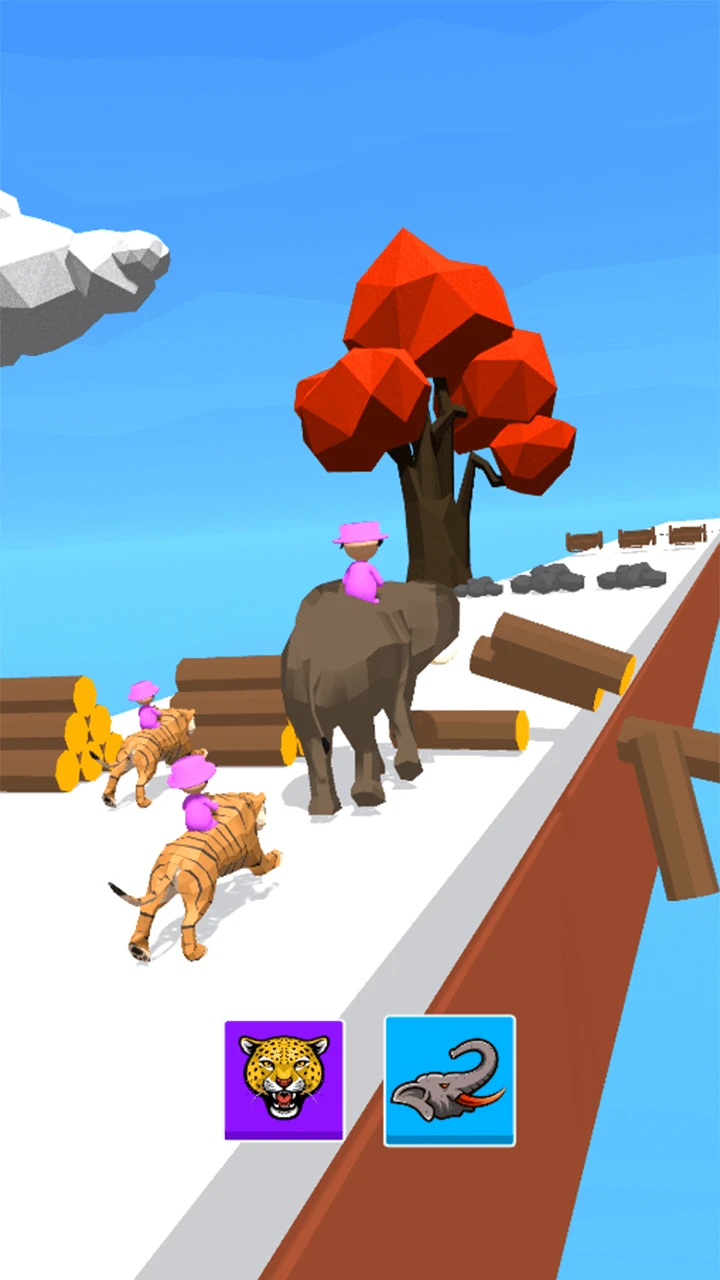
The heart of this template is its terrain-matching transformation system. As players move down the track, the environment constantly changes — and so must the player's form.
Because these terrain types appear in rapid, unpredictable succession, players have to react instantly — switching forms mid-run without breaking their stride. This creates a noticeably more interactive experience than what you'd typically find in a standard obstacle-dodging runner, and it gives the gameplay a rhythm that feels closer to a reflex puzzle than a pure speed test.
In the opening seconds of any run, the transformation mechanic feels easy — swap forms when the terrain changes, simple enough. But as pace increases, hesitation becomes the player's biggest enemy. A half-second delay in switching forms is often the difference between a clean pass and a run-ending collision.
Over time, players naturally develop three core skills:
This blend of anticipation and reaction is what gives the game real replay depth. Each attempt isn't just "try again and hope for better luck" — it's a genuine opportunity to refine timing and decision-making, which is exactly the kind of skill-based progression that keeps players returning long after the first few sessions.
Fast-paced games live or die by responsiveness. Even small input delays or frame drops can break the entire experience in a genre built around split-second decisions. This template is engineered specifically with that constraint in mind:
This kind of performance consistency is a key separator between templates that feel "good enough" in the editor and ones that actually hold up under real device testing — a distinction worth paying close attention to whenever you're evaluating Unity source code for a serious release.
One of the strongest arguments for this template isn't just what it includes out of the box — it's how naturally the core mechanic scales into new content. Because the entire system is built around "match the form to the terrain," nearly every expansion idea slots in without requiring architectural changes:
Because the transformation logic is modular, adding a new animal type doesn't require rewriting the terrain-detection system — it simply slots into the existing framework, which dramatically speeds up post-launch content updates.
Runner games succeed commercially when players genuinely feel like they're improving — not just grinding the same run over and over. Animal Shift Race delivers that sense of progress directly through its skill-based design:
Each subsequent run tends to become:
This is a meaningfully different retention driver than the "just one more try" loop found in pure-reflex runners. Players aren't just retrying — they're actively refining a skill, which creates a stronger sense of mastery and a more durable reason to keep playing.
Despite its more layered mechanic, this template is built for the same rapid reskin-and-publish workflow developers expect from any well-structured Unity asset. The customization path is straightforward:
Because the core systems are cleanly separated from the visual layer, you can realistically turn this into a completely different-feeling game with relatively modest reskin effort — without ever touching the underlying terrain-matching logic.
This project suits a wide range of developers, particularly those looking for something with more depth than the average reskin-ready runner:
Smart developers rarely publish a single title and stop. Most build a small, varied catalog of games to capture different player moods and reduce dependency on any one genre's performance. If Animal Shift Race is anchoring your runner category, a few natural additions round out a well-balanced release lineup:
Pairing a mechanically distinctive title like this runner with a handful of simpler, faster-to-master games is a proven way to capture both casual players looking for quick sessions and more dedicated players looking for something with a real skill ceiling.
The mobile game market in 2026 rewards speed and differentiation in equal measure — developers who can publish quickly and offer something genuinely distinct from the crowd tend to outperform those doing either alone. Building a transform-based runner system completely from scratch — terrain detection, form-switching logic, animation blending, and obstacle generation — would easily take weeks even for an experienced Unity developer.
Starting from a tested, working implementation instead means that time gets redirected toward what actually matters: art direction, content variety, monetization tuning, and player feedback. This is precisely the value proposition explored in our broader piece on why ready-made Unity source code continues to benefit developers in 2026 — speed-to-market and creative differentiation aren't opposing goals when you start from the right foundation.
Animal Shift Race stands apart in a genre that usually relies on reflexes alone, by introducing genuine decision-making into every run. The terrain-matching transformation mechanic gives players a real skill ceiling, the modular architecture makes expansion straightforward, and the clean separation between game logic and visual assets means reskinning is fast without sacrificing the mechanic that makes this template interesting in the first place.
Whether you're learning Unity's state-management patterns, building your next casual release, or rounding out a varied game portfolio, this template offers a rare combination: a familiar genre with a meaningfully fresh hook.
Platform: Unity 6000 or higher
Need technical assistance? Reach out to the Unity Source Code support team for help with setup, customization, or expansion planning.
🌟🌟🌟🌟🌟 If this template helped you publish your game, a review helps other developers discover it too.
You need to login to comment!
Total Sold:
0
Total Comments: