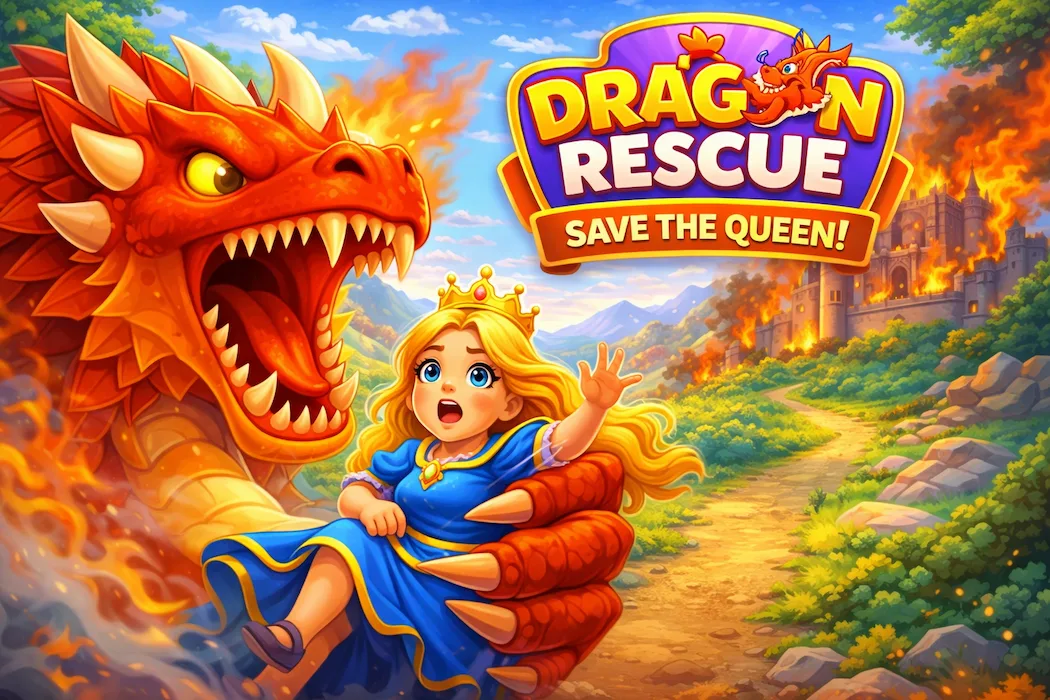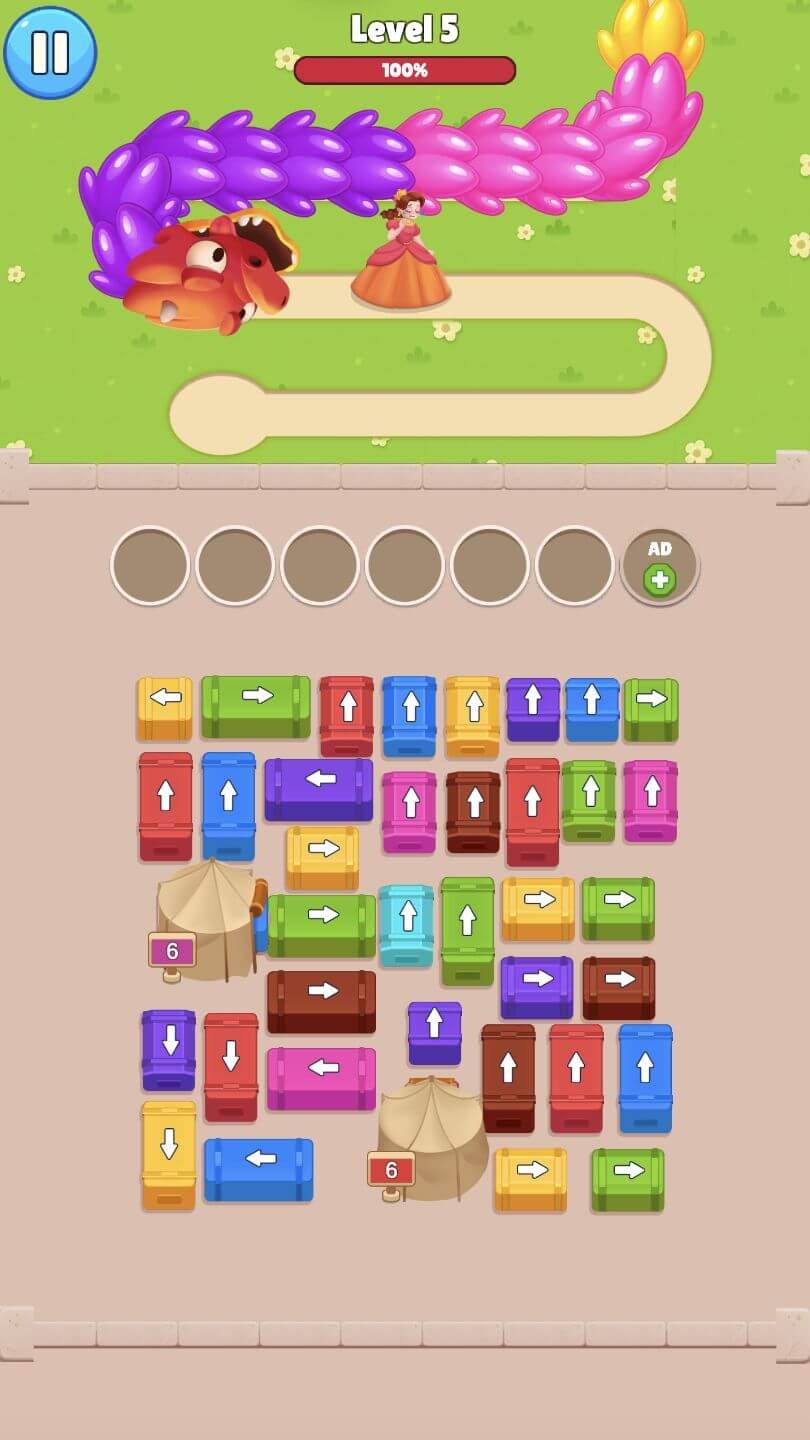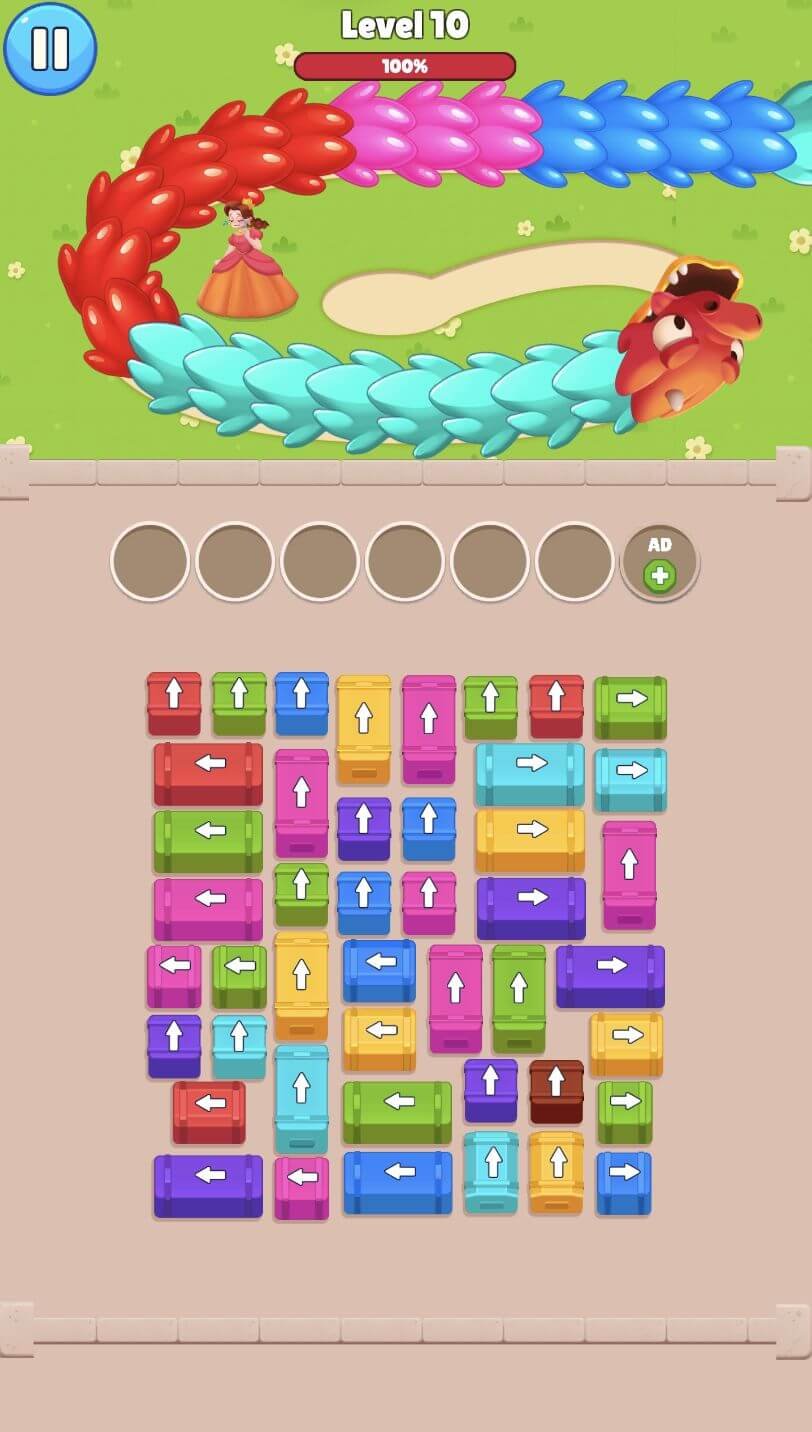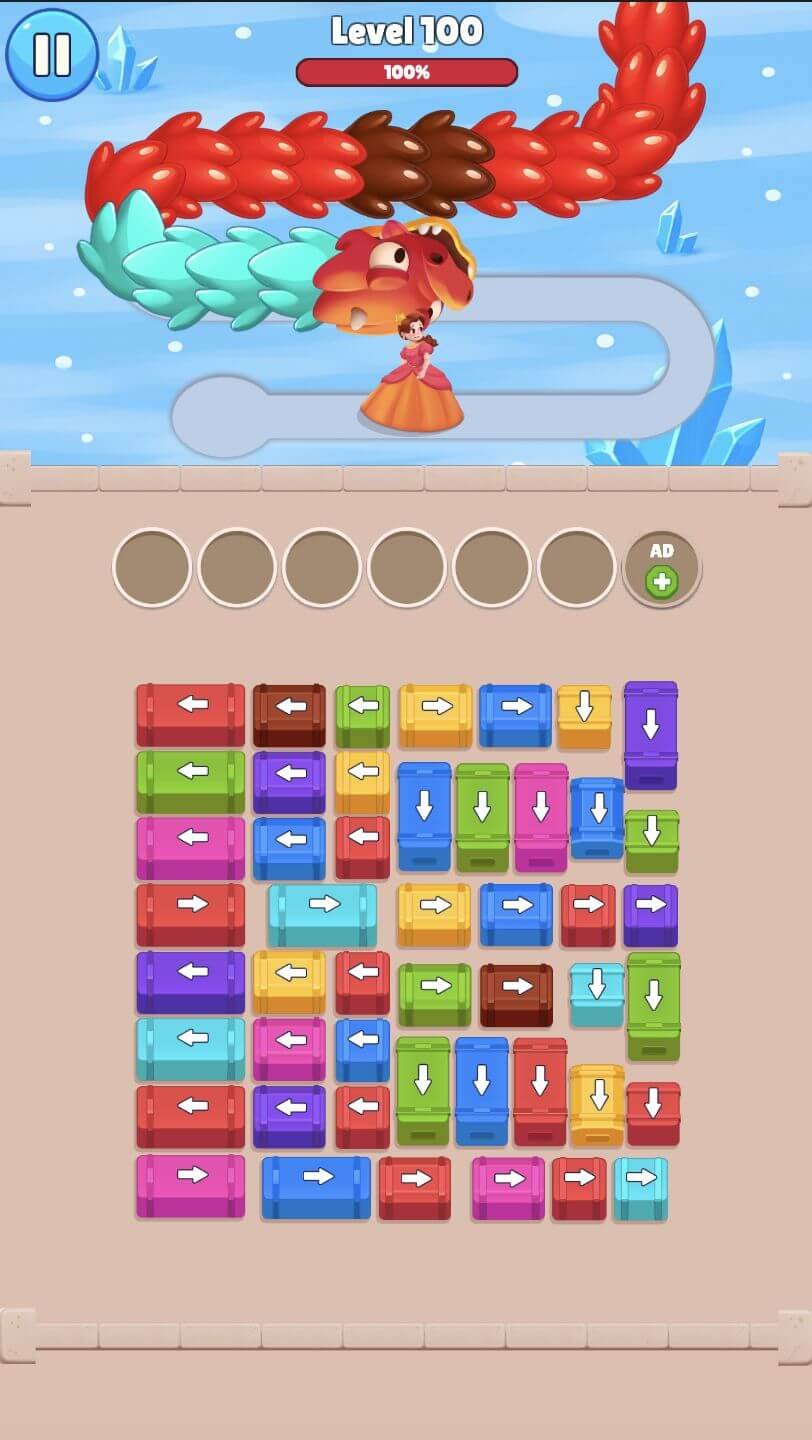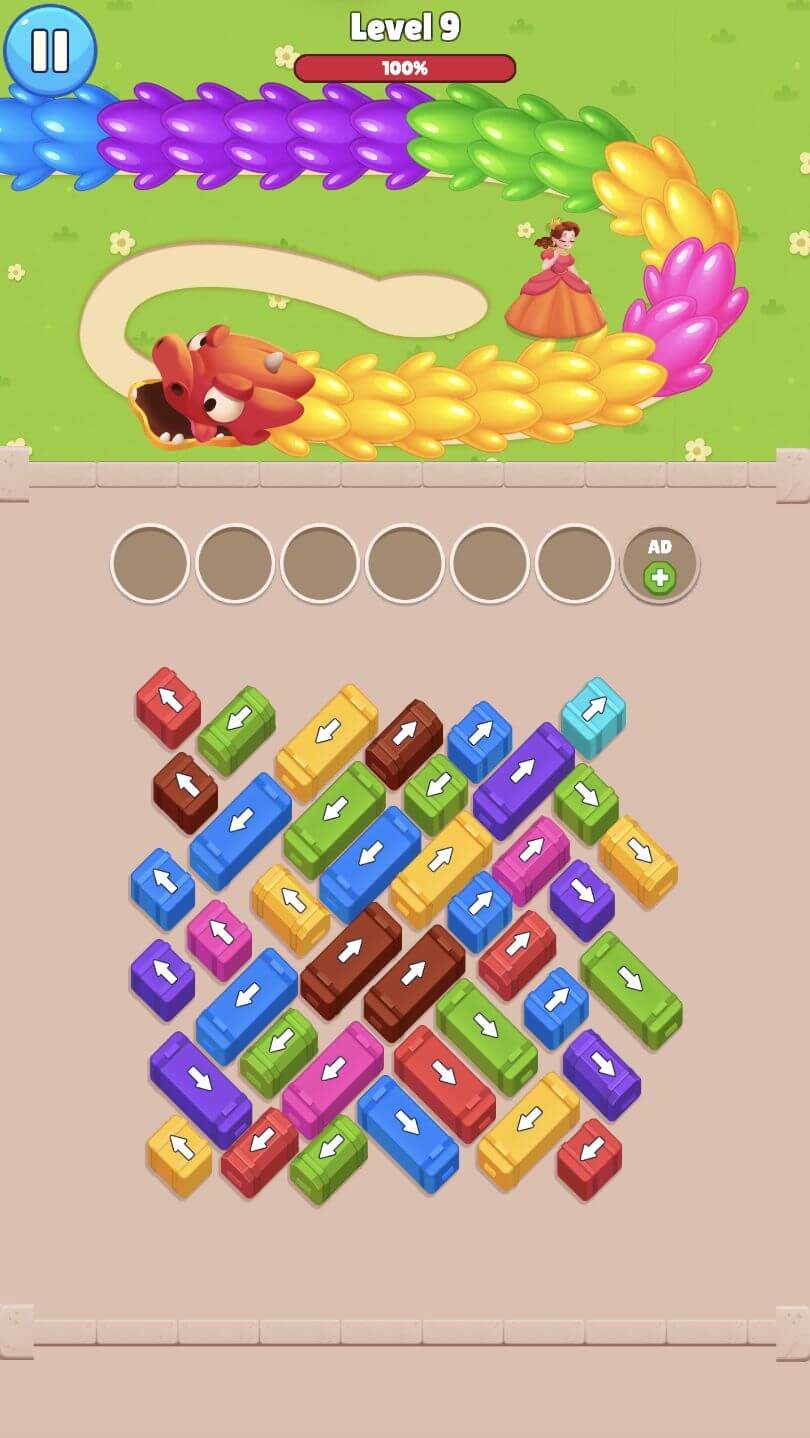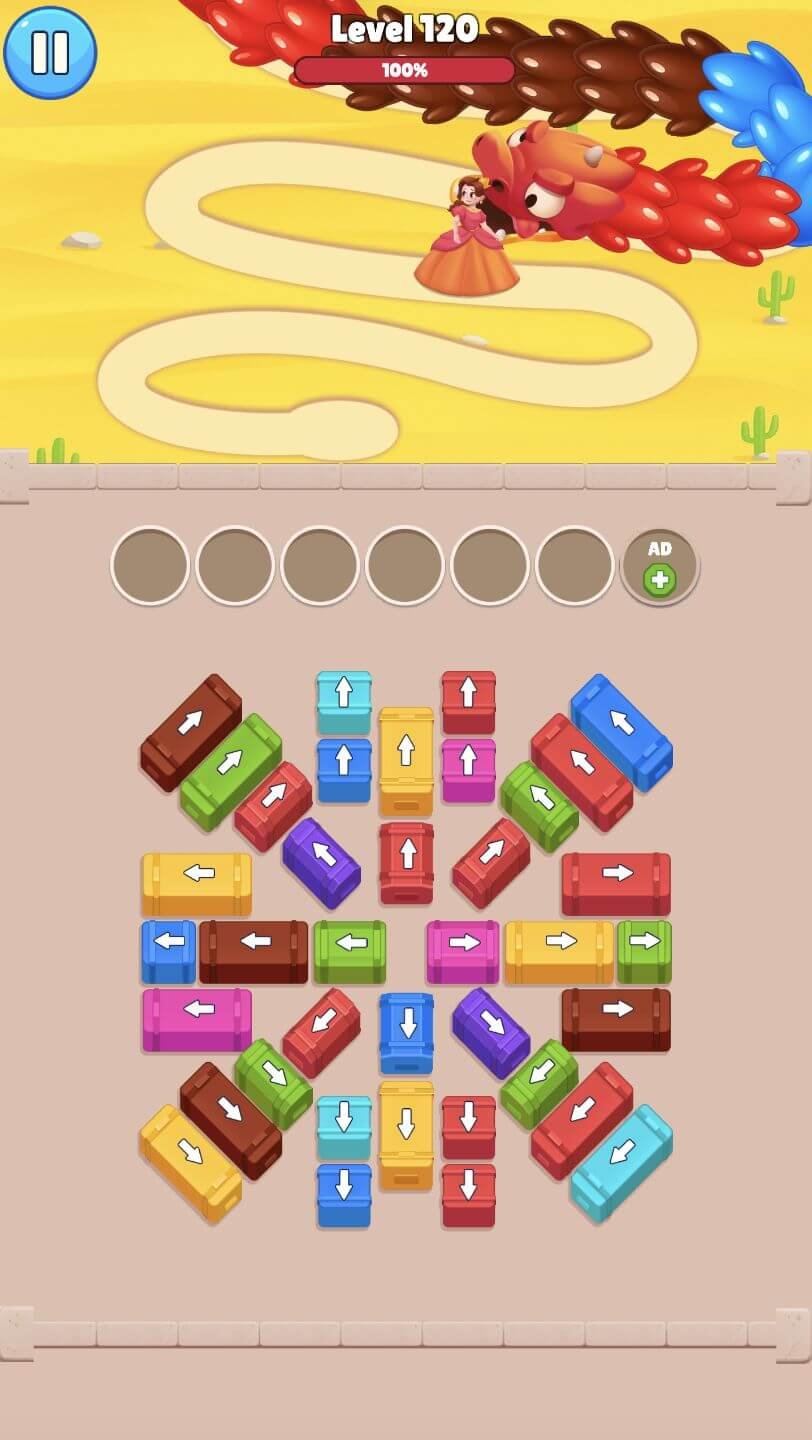

In a mobile gaming market flooded with generic match-3 grids and color-sort puzzles, Queen Rescue Dragon Puzzle stands out immediately. It combines a compelling narrative hook — rescue the queen from a fiery dragon — with intelligent logic-based puzzle mechanics that challenge players to think before they act, plan before they move, and feel genuine satisfaction when a complex level finally clicks into place.
This is not just another puzzle reskin. It is a complete Unity 2D adventure puzzle game source code built for Android and iOS, packed with AdMob monetization, smooth mobile performance, easy customization tools, and a level design philosophy that converts new installs into long-term returning players.
If you are a Unity developer, indie game creator, startup, or freelancer looking to publish a puzzle game that earns consistent AdMob revenue while delivering real entertainment value to players, the Queen Rescue Dragon Puzzle Unity Game Template is one of the smartest investments you can make in your game development business right now.
This guide breaks down every feature in complete detail — what it is, why it matters, how it drives retention, and how it earns money.
Queen Rescue Dragon Puzzle Unity Game Template with AdMob is a ready-to-publish Unity project that delivers a complete, polished adventure logic puzzle game built entirely with clean, well-organized C# scripts and Unity's 2D game system.
Product Details at a Glance:
This template is a production-ready game project — not a proof of concept, not a tutorial exercise. It is the kind of structured, fully functional starting point that lets you focus your time on creative customization and publishing rather than rebuilding core systems from scratch.
The concept behind Queen Rescue Dragon Puzzle is what sets it apart from the sea of abstract puzzle games on the Play Store. Players are not just moving tiles or sorting colors — they are on a mission. A queen is trapped, a dragon stands in the way, and each level is a puzzle that must be solved to advance the rescue.
This narrative-driven puzzle structure does something that abstract puzzles cannot: it gives players an emotional reason to keep playing. They are not chasing a high score — they are trying to save the queen. Each level completion feels like progress in a story, not just advancement through a difficulty curve. That emotional investment is what drives day-30 retention far beyond what level-only puzzle games typically achieve.
The gameplay blends logic, timing, and creative thinking in a format that is accessible to casual players but genuinely challenging for experienced puzzle enthusiasts. Early levels teach the mechanics organically. Mid-game levels introduce new obstacles and layered interactions. Late-game levels require players to think several moves ahead — creating the kind of "aha moment" satisfaction that generates positive reviews and word-of-mouth recommendations.
The level design architecture in Queen Rescue Dragon Puzzle is built around a gradual difficulty progression system — one of the most important and most overlooked elements of any successful mobile puzzle game.
Levels in the early game are deliberately forgiving. Players learn the rescue mechanics without frustration, experience small wins frequently, and build confidence in the core controls. As they progress, each new level type is introduced with enough scaffolding that players understand the new mechanic before it becomes a serious obstacle.
This progressive difficulty curve is the foundation of strong Day-1 and Day-7 retention. Players who experience early frustration uninstall. Players who experience early success keep playing. The level design in this template is engineered to maximize that early success rate while steadily increasing the challenge that keeps experienced players engaged for weeks and months.
The puzzle system also supports new obstacle types and level mechanics that can be added without rewriting core systems — giving you a clear path to post-launch content updates that re-engage lapsed players.
The dragon challenge mechanic is the signature feature that gives this game its identity. Rather than every level being a purely static puzzle, certain levels introduce time-sensitive or reactive elements centered on the dragon character.
These dragon encounters create tension and urgency that pure logic puzzles lack. Players must solve the puzzle not just correctly but under pressure — a design pattern that significantly increases both session engagement and the emotional reward when a level is completed successfully.
Dragon challenge levels also create natural rewarded ad placement opportunities. A player who fails a tense dragon level is in exactly the emotional state where they are most willing to watch an ad for another attempt — high frustration, high motivation, voluntary engagement. This is the optimal psychological context for rewarded video ads, and it consistently generates the highest eCPMs of any ad format.
A puzzle game lives or dies on how it feels to interact with. Clunky animations, delayed tap response, or imprecise touch controls immediately signal low quality to players and trigger early uninstalls.
The Queen Rescue Dragon Puzzle template addresses this at the engine level. All character animations — the queen's movement, the dragon's reactions, environmental elements, and level completion sequences — are frame-accurate and smooth at 60 FPS on target mobile hardware.
Touch controls are calibrated for mobile-first interaction. Every tap registers cleanly. Every drag is precisely tracked. Every puzzle interaction responds immediately. This level of polish is what separates games that receive 4-star and 5-star reviews from games that receive frustrated 2-star and 3-star ratings about controls feeling "slippery" or "unresponsive."
The template has been tested and optimized for Android 9.0 through Android 15.0, ensuring consistent performance across the full range of modern Android devices — from budget smartphones to flagship hardware.
The monetization system in this template is not an afterthought — it is a fully integrated, production-tested implementation of all three primary AdMob formats, placed at the exact moments that maximize revenue without damaging player experience.
Rewarded Video Ads are placed at high-motivation failure moments — when a player fails a level and wants another chance, or when they need a hint to unblock a difficult puzzle configuration. These placements are voluntary, which drives completion rates above 85% and generates premium eCPMs between $8 and $16 per thousand impressions in tier-1 markets.
Interstitial Ads appear at natural session boundaries — between levels, after returning from the pause menu, and at the transition between level groups. These are non-intrusive because they appear when the player is already in a state of transition rather than active engagement. Properly placed interstitials generate consistent volume revenue across your entire player base, including casual players who never engage with rewarded ads.
Optional Reward Ads give players who prefer not to spend money a way to access bonus features — extra hints, additional lives, special level skips — by watching an ad voluntarily. This converts the "never-pay" segment of your player base into ad revenue participants.
Together, these three streams create a diversified revenue architecture that earns from every player at every engagement level.
One of the strongest advantages of this template is how deeply it has been designed for rapid customization and reskinning without requiring advanced Unity knowledge or structural code changes.
The project is organized into clearly labeled folders with a logical hierarchy: character assets separated from environment assets, UI elements separated from gameplay scripts, level data separated from core engine logic. This organization means you can find, replace, and modify any element of the game without accidentally breaking unrelated systems.
What you can customize without coding:
What you can customize with basic C# knowledge:
This combination of no-code and minimal-code customization paths means the template is genuinely accessible to Unity beginners while still being architecturally solid enough for experienced developers to build significant new features on top of.
The scripts in this project are written following Unity best practices — modular, commented, and organized to make reading and modifying them as straightforward as possible.
Scripts are divided by responsibility: one manager script per system (GameManager, LevelManager, AdManager, UIManager, AudioManager), with individual component scripts handling specific behaviors. This separation of concerns means that modifying the ad placement logic does not risk breaking the level loading system, and vice versa.
Comments throughout the codebase explain what each section does and why — turning the project into a genuine learning resource for developers who want to understand how professional mobile puzzle games are architected, not just use the template to ship a game.
Indie Game Developers who want to publish a unique, story-driven puzzle game on Google Play and the App Store without spending three to four months building the core puzzle system, animation pipeline, and monetization layer from scratch.
Beginners Learning Unity who want to study a complete, real-world puzzle game project — how level management works, how AdMob is properly integrated, how animation state machines are organized, and how mobile performance is optimized — by reading professional code rather than fragmented tutorials.
Freelancers and Agencies who need to deliver a complete, polished puzzle game to a client on a deadline that does not allow for building from scratch. The documentation and clean code structure make handoff straightforward.
Mobile Game Entrepreneurs building a puzzle game portfolio who want multiple titles live on the store — each earning AdMob revenue, cross-promoting each other, and building a combined user base. Starting from a complete template makes it financially realistic to have three games live within a single year.
Startups Entering the Mobile Gaming Market who need a commercially viable product quickly to test market response before investing in more ambitious custom development.
If you are building a game portfolio or looking for your next Unity project, these five popular templates from Unity Source Code represent some of the highest-performing categories in mobile gaming right now:
Genre: Crowd Runner / Strategy Combat
Last War Survival Battle puts players in command of an army that grows as they advance through enemy lines. The crowd-merging mechanic — collect soldiers as you run, then battle with your full force at each checkpoint — is one of the most-downloaded mobile formats of the past two years. This template includes wave-based combat, unit upgrade systems, and AdMob interstitial integration at every natural level break.
→ Explore Last War Survival Battle on Unity Source Code
Genre: Multiplayer Board Game
Ludo is one of the most-played board games on earth, and its digital multiplayer format has among the strongest daily retention rates in the casual gaming category. This complete Unity 3D template includes real-time online multiplayer with matchmaking, offline AI opponents, local pass-and-play, player profiles, leaderboards, daily rewards, and AdMob monetization — everything needed to launch a competitive Ludo app in the South Asian, Middle Eastern, and global markets.
→ Explore Ludo Online Multiplayer Game on Unity Source Code
Genre: Interior Design / Casual Simulation
Home Design Makeover is one of the most consistent revenue earners in casual mobile gaming, driven by a demographic — women aged 25–45 — that leads all categories in both IAP spending and rewarded ad engagement. Players renovate rooms by solving match-based puzzles, with each completed renovation revealing a satisfying before-and-after transformation. This template includes match gameplay, room progression, a star-earning system for unlocking decor items, and full AdMob integration.
→ Explore Home Design Makeover Unity Game on Unity Source Code
Genre: Endless Runner
Endless runners are among the most-downloaded game formats in mobile history, and this Subway Runner template brings the genre to Unity with a complete, polished implementation. Players dodge trains, collect coins, unlock characters, and race for high scores in an endlessly generated world. The template includes obstacle generation, character unlock systems, AdMob rewarded and interstitial placement, and optimization for smooth performance on all Android devices.
→ Explore Subway Runner Unity Game Source Code on Unity Source Code
Genre: Match-3 Puzzle
Match-3 puzzle games are the most-played puzzle format in mobile history — Candy Crush Saga alone has been downloaded over three billion times. Tile World Match 3 brings this genre to Unity with a complete implementation: a full match-3 board engine, power-up system, level pack with escalating difficulty, booster IAP, daily challenges, and AdMob rewarded ads for extra moves. Match-3 games generate some of the strongest combined AdMob and IAP revenue of any casual puzzle format.
→ Explore Tile World Match 3 Unity Game on Unity Source Code
Publishing a Unity puzzle game — or any mobile game — without understanding the monetization and genre landscape is one of the most common and expensive mistakes indie developers make. These two blog posts from Unity Source Code will directly improve your launch strategy and long-term earnings:
This is the most practical AdMob monetization guide available for Unity developers. It covers which ad formats generate the highest eCPMs, exactly where to place rewarded ads and interstitials for maximum revenue without damaging retention, the difference between banner ads and rewarded video in terms of real earnings, and the specific monetization patterns that successful indie developers use to generate consistent monthly income from mobile games. If you are integrating AdMob into Queen Rescue Dragon Puzzle or any Unity game for the first time, read this before you open the AdMob dashboard.
→ Read: How to Make Money with Unity Games Using AdMob
Racing games remain one of the most profitable and consistently downloaded categories in mobile gaming. From realistic physics-based car simulators to arcade-style stunt racers and endless highway runners, the racing category has something for every developer skill level and every audience. This guide breaks down the best Unity racing game source codes available in 2026, explains what makes each one commercially strong, and shows how Unity makes it easier than ever to build, customize, and publish racing games across Android, iOS, and PC from a single codebase.
→ Read: Top Racing Game Source Codes in Unity — 2026 Guide
What does the Regular License include? The Regular License ($45) includes the complete Unity project with all source code, documentation, APK demo, and PNG assets. It includes 3 months of technical support and covers one published app.
Does this game work on iOS as well as Android? Yes. The project supports both Android and iOS builds. iOS publishing requires a Mac with Xcode, a paid Apple Developer account ($99/year), and the standard Unity iOS export process.
How difficult is it to change the character designs and level themes? Straightforward even for beginners. All visual assets are organized in clearly labeled folders. Replacing character sprites, background art, and UI elements requires no coding — only basic familiarity with Unity's inspector and asset system.
Can I add new levels after the initial launch? Yes. The level system is designed to support adding new levels through configuration rather than code changes. This makes post-launch content updates fast to implement and deploy.
Is AdMob already integrated or do I need to add it? AdMob is already integrated in the project. You only need to replace the placeholder Ad Unit IDs with your own from the AdMob console — a process that takes approximately five minutes per ad unit.
Who do I contact for technical support? Support is available through the Unity Source Code team via the contact options listed on the product page. The Extended License includes 6 months of priority support.
The mobile puzzle game category is competitive, but it is competitive because the audience is enormous and the revenue is real. Players worldwide spend billions of hours on puzzle games every year, and they are actively looking for the next great puzzle experience to fill their commutes, lunch breaks, and leisure time.
Queen Rescue Dragon Puzzle Unity Game Template gives you a starting point that is already well ahead of where most indie developers begin. The narrative concept is distinctive. The mechanics are well-designed and carefully tuned. The monetization is properly integrated. The code is clean and customizable. The performance is optimized for real devices.
Your job is to make it your own — apply your visual style, customize the characters and environments, tune the level difficulty to your audience, set up your AdMob IDs, and publish. The foundation is already built and tested.
Explore the full collection of premium Unity game templates, puzzle games, multiplayer games, and action games at Unity Source Code — production-ready projects built by professional developers for developers who want to launch faster, earn sooner, and build smarter.
You need to login to comment!
Total Sold:
0
Total Comments: