

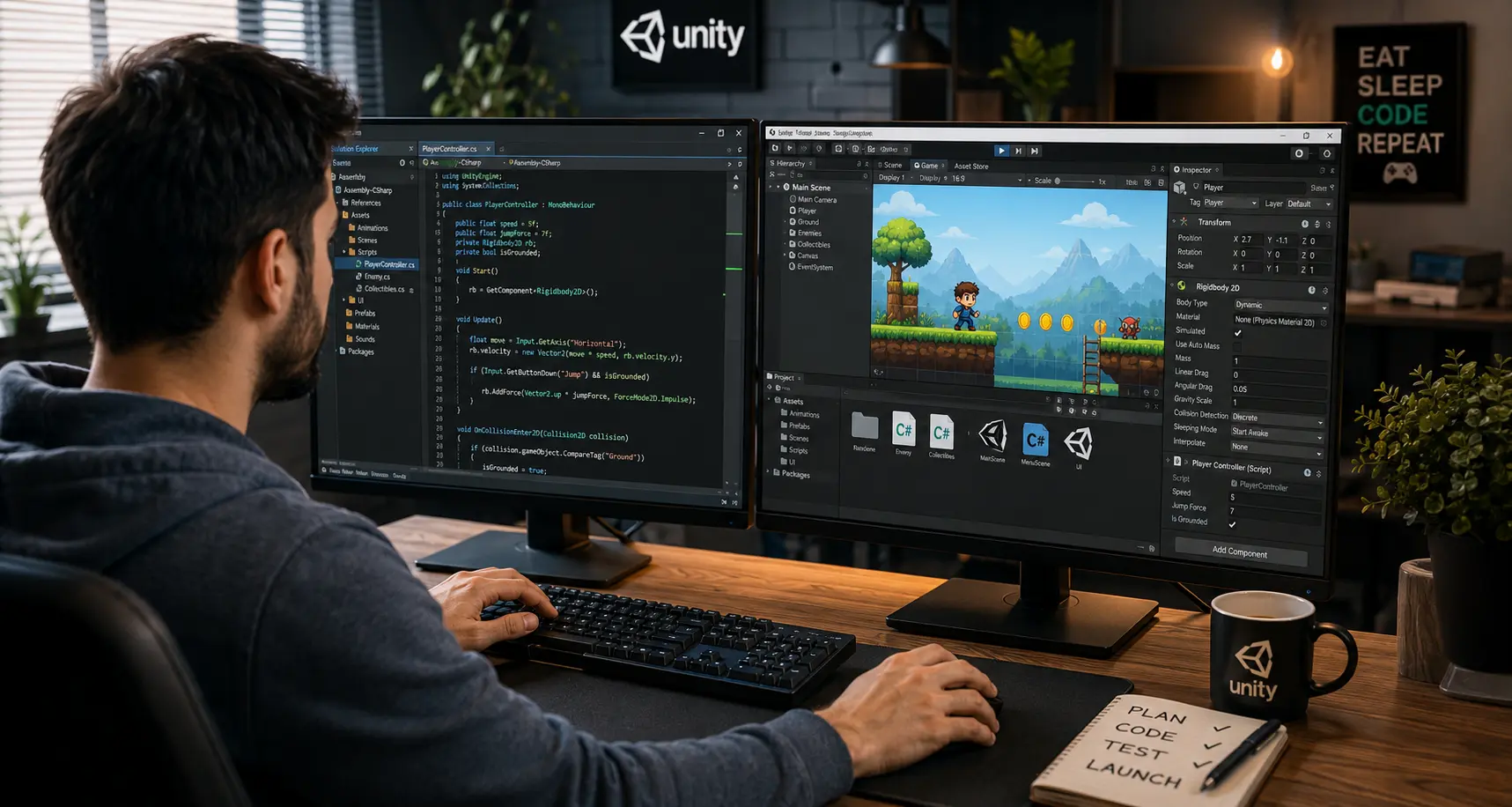
This is where ready-made Unity source code has become a valuable resource. Instead of building every system from scratch, developers can start with a complete project foundation and focus on customization, creativity, and growth.
Whether you're creating your first game or expanding an existing portfolio, ready-made Unity source code can significantly reduce development time while improving your chances of launching a successful product.
Building a game from scratch requires creating gameplay mechanics, user interfaces, player controls, menus, data management systems, and monetization features. These tasks can consume months of development time before the actual game idea even takes shape.
Ready-made Unity source code provides a working foundation that already includes many essential systems. Developers can spend less time building common features and more time improving gameplay, adding unique content, and enhancing player experiences.
For example, if you're creating a racing game, you can start with an existing racing framework rather than developing vehicle physics and control systems from the beginning.
Related Article: Unity Game Source Code Collection
Hiring experienced Unity developers can be expensive, especially for startups and independent creators working with limited budgets.
Using professionally developed source code helps reduce expenses by:
A quality Unity project template often costs far less than the expense of building identical functionality from scratch.
For many developers, this creates an opportunity to launch projects faster while maintaining professional standards.
Related Article: Affordable Unity Game Templates
One of the biggest advantages of ready-made Unity source code is the educational value it provides.
Many beginners struggle because tutorials often teach isolated concepts without showing how complete games are structured. By studying full Unity projects, developers can understand how professional systems work together.
You can learn:
Learning from real projects often accelerates skill development far more effectively than following disconnected tutorials.
Related Article: How to Learn Unity Using Complete Projects
Game development success often depends on speed. The faster you can release a playable version, the sooner you can collect feedback and validate your idea.
Ready-made Unity source code makes rapid prototyping much easier. Instead of spending months developing a basic framework, developers can customize an existing project and launch a market-ready version significantly faster.
This approach allows you to:
In today's competitive market, speed can provide a major advantage.
Many Unity source code projects include monetization systems that are already integrated and tested.
Common features include:
Instead of spending additional time implementing monetization tools, developers can focus on improving user engagement and retention.
Having these systems available from the start can accelerate the path to profitability.
Related Article: Unity AdMob Integration Guide
Independent developers often face challenges related to limited budgets, small teams, and tight deadlines.
Ready-made Unity source code helps overcome these obstacles by providing a reliable starting point that has already been tested and structured for development.
Benefits for indie teams include:
Rather than reinventing common game systems, developers can focus on creating unique experiences that stand out in the marketplace.
Related Article: Best Unity Mobile Game Source Code Projects
Unity source code refers to complete or partially completed game projects built using the Unity game engine. These projects typically include scripts, assets, scenes, user interfaces, and gameplay systems that developers can study, modify, and publish according to licensing terms.
Yes. Beginners can learn game development faster by examining real project structures and understanding how professional developers organize and build games.
Most Unity source code packages are fully customizable. Developers can modify graphics, gameplay mechanics, levels, user interfaces, monetization systems, and other features.
Yes. Using a pre-built project foundation can significantly reduce development time, testing requirements, and overall production expenses.
Popular categories include racing games, puzzle games, hyper-casual games, shooting games, simulation games, educational games, multiplayer games, and strategy games.
In 2026, ready-made Unity source code is no longer just a shortcut—it's a strategic development tool. It enables developers to save time, reduce costs, learn professional development practices, and launch games faster than ever before.
Whether you're a beginner looking to understand how complete Unity projects work or an experienced developer aiming to speed up production, investing in quality Unity source code can provide a strong foundation for success.
By leveraging existing systems and focusing on innovation, developers can spend more time creating engaging experiences and less time rebuilding features that already exist.



