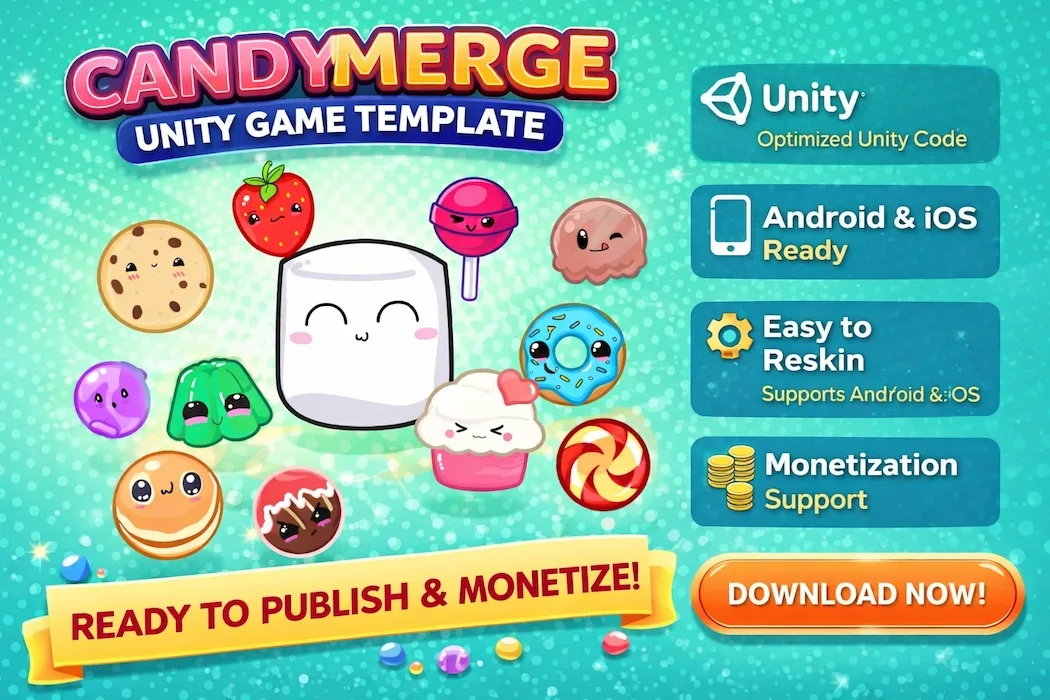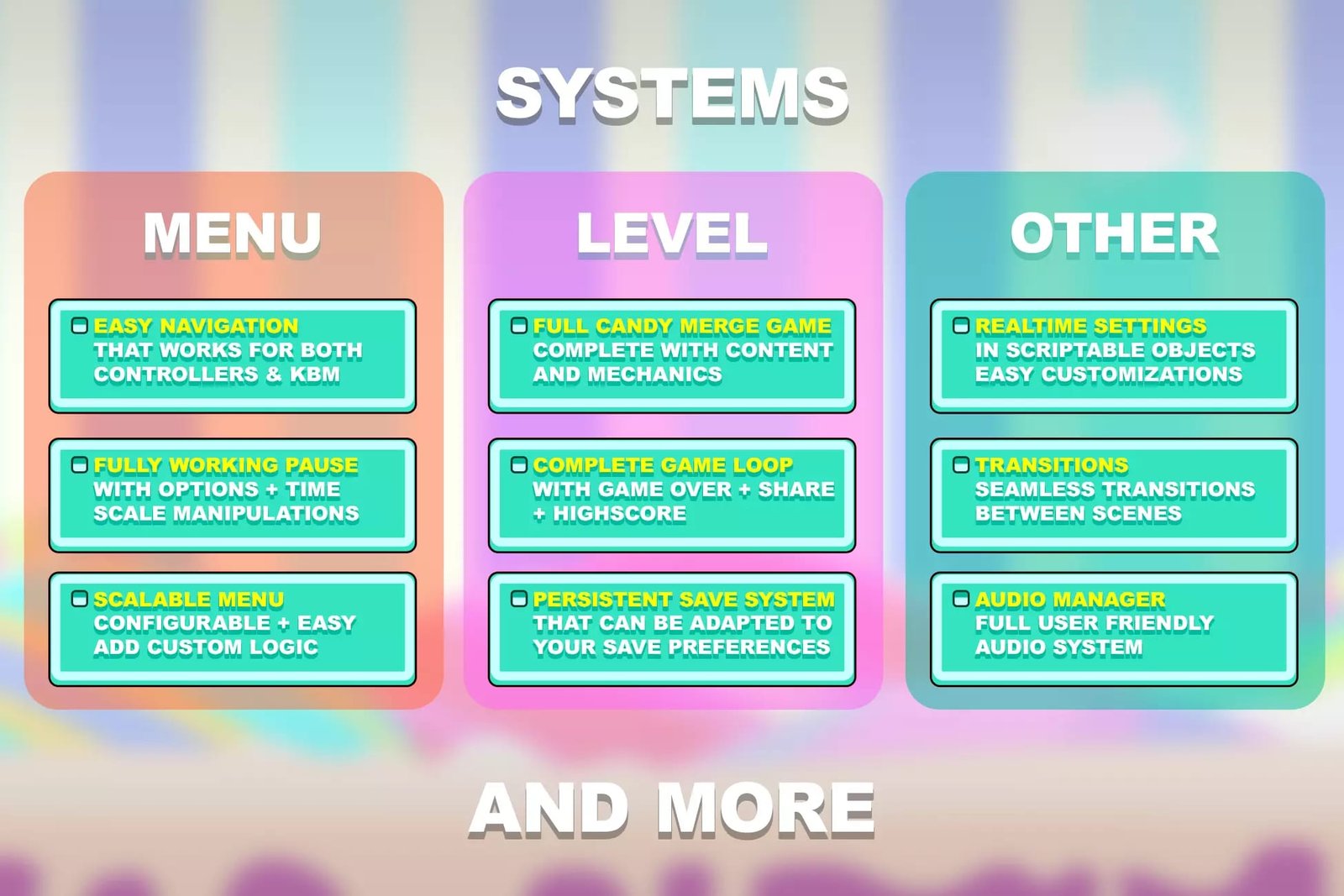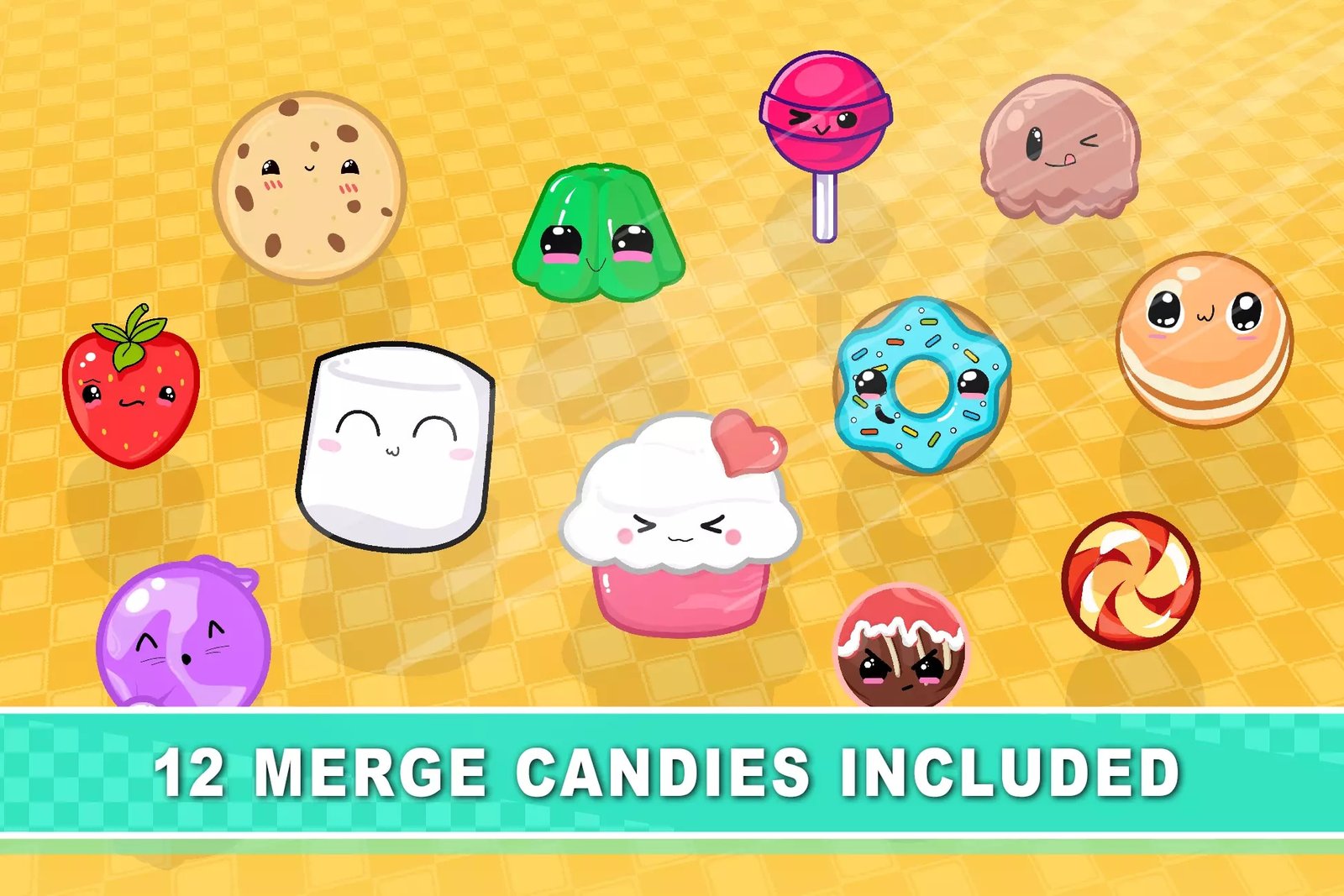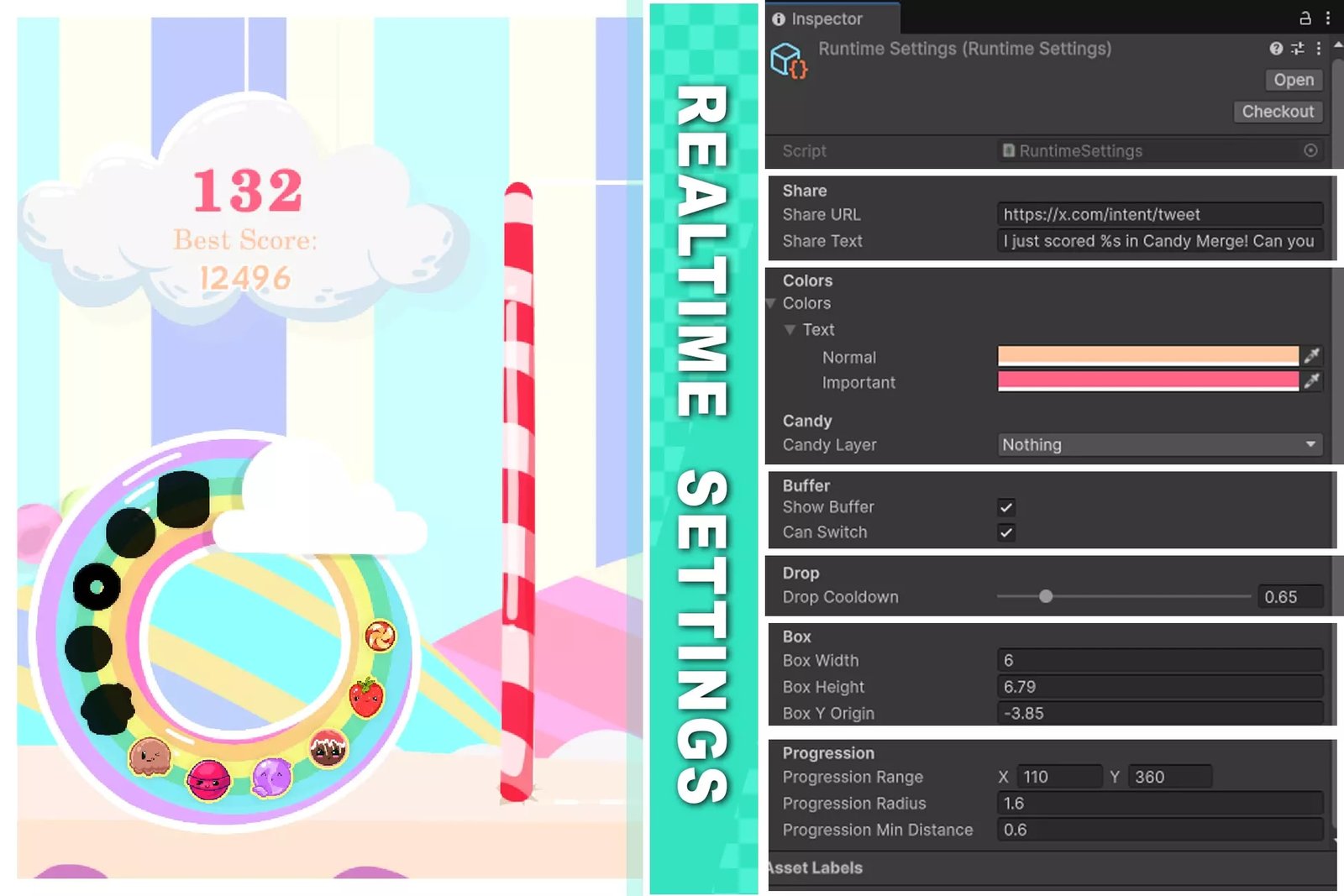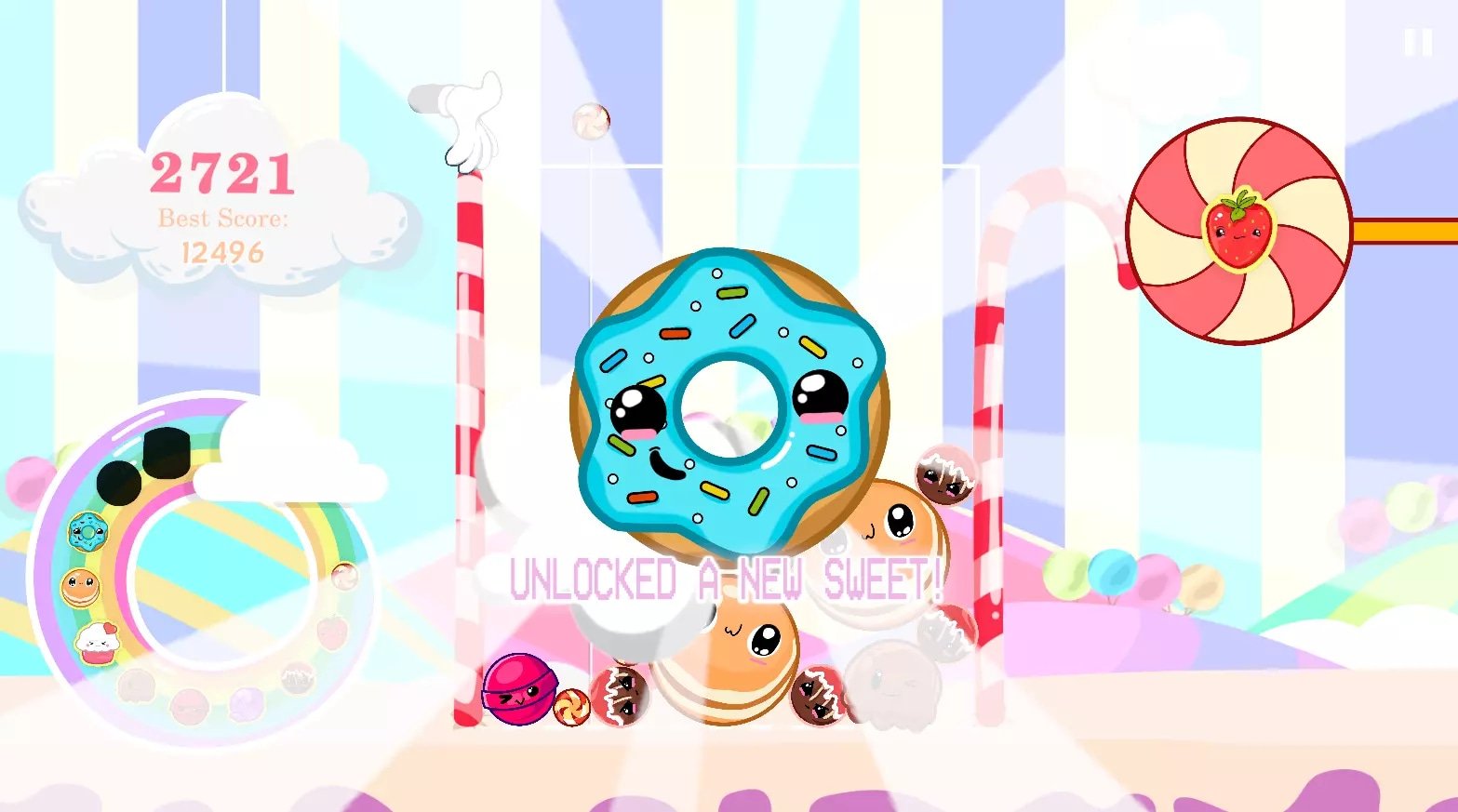

Look at any top-grossing or top-free casual games chart and you'll almost always spot a merge mechanic somewhere in the top twenty. There's a reason this genre keeps reappearing across app store charts year after year: it hits a rare combination of being genuinely relaxing to play while still giving players enough strategic decision-making to keep them engaged for the long haul. Candy Merge is built directly on top of that proven formula, giving developers a working, polished starting point instead of a gamble on an unproven concept.
Rather than gambling months of development time on an original idea that might not resonate, this template lets you step into a category with a track record of strong retention and monetization, then make it distinctly your own through branding and customization.
At the heart of this template is a simple but compelling mechanic — combine matching candy pieces to create new, higher-tier items. That single interaction is deceptively powerful:
It's the kind of mechanic that doesn't need to be reinvented — it needs to be well executed, and that's exactly what this source code delivers out of the box.
A merge game that stutters or takes too long to load loses players before they ever get invested in the mechanic. This template was engineered with that risk in mind:
Reliable performance isn't a bonus feature here — it's a core part of what makes a merge game worth playing past the first few minutes.
Merge games are structurally well-suited to ad-based monetization, largely because of how session-based and repeat-focused the gameplay is. Candy Merge was designed with that reality already factored in:
If you want a deeper, numbers-driven look at what selling a reskinned Unity game can actually generate, this breakdown of how much you can earn selling a reskinned Unity game is worth reading before you finalize your monetization plan.
This template isn't meant to be shipped exactly as-is — it's meant to be a foundation you reshape into something distinctly yours:
That last point matters more than it might seem at first glance — a clean, adaptable core system is what lets developers turn one purchase into an entire portfolio of related titles.
A template is only as valuable as the codebase underneath it. This one is organized specifically to reduce the friction of picking up someone else's project:
Clean architecture like this is what actually saves development time — far more than the mechanics being pre-built in the first place.
Once the core template is running the way you want, there's a lot of room to build outward:
Consistent post-launch updates like these are also one of the more reliable ways to keep your app visible in store search results over time, since active development signals matter to store algorithms.
Is Candy Merge a good choice if I've never built a mobile game before? Yes. The mechanic itself is simple to understand, the codebase is organized clearly enough for a relative beginner to navigate, and merge games as a category tend to be forgiving for first-time developers since the core loop doesn't require complex systems to feel complete.
How much customization is actually required before I can publish this? At a minimum, most developers rebrand the visual layer — candy art, color themes, and UI — before publishing, since shipping the stock visuals will look identical to any other buyer's release. Beyond that, deeper changes to progression pacing or added features are optional, not required for a shippable build.
Does this template come with monetization already integrated, or do I have to build that myself? The structure is already built to support common ad formats like rewarded and interstitial placements. You'll still need to connect your own ad network account and configure your specific ad units, but the architecture for that integration is already in place.
Will this run well on lower-end Android devices, or only flagship phones? The template was built with performance across both budget and high-end hardware in mind, which matters significantly for a casual genre like merge games, where a large share of the global player base is on mid-range or older devices.
Can I use this same base to launch more than one game? Yes — this is actually one of the more common strategies with a template like this. Because the underlying system is flexible, developers frequently use it as the foundation for multiple distinct releases with different themes and branding.
Where can I see the gameplay before deciding to buy? There's a live preview available on itch.io as well as a video walkthrough showing the mechanics in action.
What kind of support is available if I run into technical issues? You can reach the support team directly through Unity Source Code's Team contact for setup or technical questions during development.
If merge mechanics are your focus but Candy Merge isn't quite the exact theme you're after, a few closely related templates are worth a look:
For a broader view of everything available, browse the full Unity games collection to compare mechanics and find the best fit for your next release.
Not every developer has the same goals, so it's worth being specific about where Candy Merge fits best:
First-time mobile developers benefit from starting with a mechanic that's already proven to work, rather than gambling their first release on an untested idea. Learning Unity through a real, functioning project tends to teach more than tutorials ever will.
Developers building a portfolio of casual titles can treat this as one entry in a broader release strategy, using the same underlying system across several differently branded games rather than starting each one from scratch.
Freelancers taking on client work get a dependable, well-tested base they can quickly reskin and hand off, without needing to justify unproven mechanics to a client who wants something with a track record.
Anyone specifically targeting the merge genre gets a head start on a category that consistently performs well across app store charts, without needing to reverse-engineer why competing merge games succeed.
For developers who prefer a concrete plan over an abstract sales pitch, here's roughly what a reasonable production timeline looks like starting from this template:
That's a genuinely achievable pace for a solo developer working part-time, and it's a fraction of the time required to design, build, and balance an original merge mechanic from a blank Unity project.
Candy Merge gives developers a genuinely proven mechanic, tuned for mobile performance, wired for monetization, and flexible enough to become the base for an entire portfolio of games rather than a single one-off release. If you're looking to enter the merge puzzle category without spending months building and debugging the core loop from scratch, this template gets you most of the way to a publishable, revenue-ready game before you've written a single new script.
Contact us on Skype for technical help
Skype ID: Unity Source Code
Don’t forget to review us!
You need to login to comment!
Total Sold:
0
Total Comments: