Reskinning is one of the most popular entry points into mobile game development — and for good reason. You take an existing, proven Unity source code, change the art, sounds, and branding, and publish it as your own game on the Google Play Store. But the question every beginner asks is the same one you're probably asking right now:
How much money can you actually make from a reskinned Unity game?
In this guide, we're going to break down real, honest numbers — from zero-budget hobby projects to well-marketed hyper-casual hits — so you know exactly what to expect before you invest your time or money into your first (or next) reskin.
A "reskin" is when a developer takes an already-built Unity game — complete with working mechanics, UI, and code — and replaces the visual assets (sprites, characters, backgrounds, sounds, icons) to make it look like a brand-new game. The core gameplay logic stays the same, but the branding, theme, and presentation are unique to the publisher.
This approach is popular because:
If you're new to this space, it's worth reading our detailed guide on how to learn Unity game development faster using complete, ready-made projects, which explains exactly how reskinning fits into a smart, low-risk development strategy.
Before we talk numbers, you need to understand the three main revenue streams a reskinned game can generate on Google Play:
This is the #1 income source for reskinned hyper-casual and casual games. Revenue comes from banner ads, interstitials, and rewarded video ads shown to players. If you haven't set this up yet, our step-by-step tutorial on how to integrate AdMob into a Unity game template walks you through the entire process.
Removing ads, unlocking premium skins, or buying in-game currency can add a meaningful secondary income stream, especially for idle and simulation-style games.
Some developers don't monetize through players at all — instead, they build a polished reskin and sell the entire app (source code + Play Store listing) to another buyer on marketplaces like CodeCanyon, Flippa, or directly through source code marketplaces.
For a broader breakdown of these strategies, check out our complete guide on how to make money with Unity games.
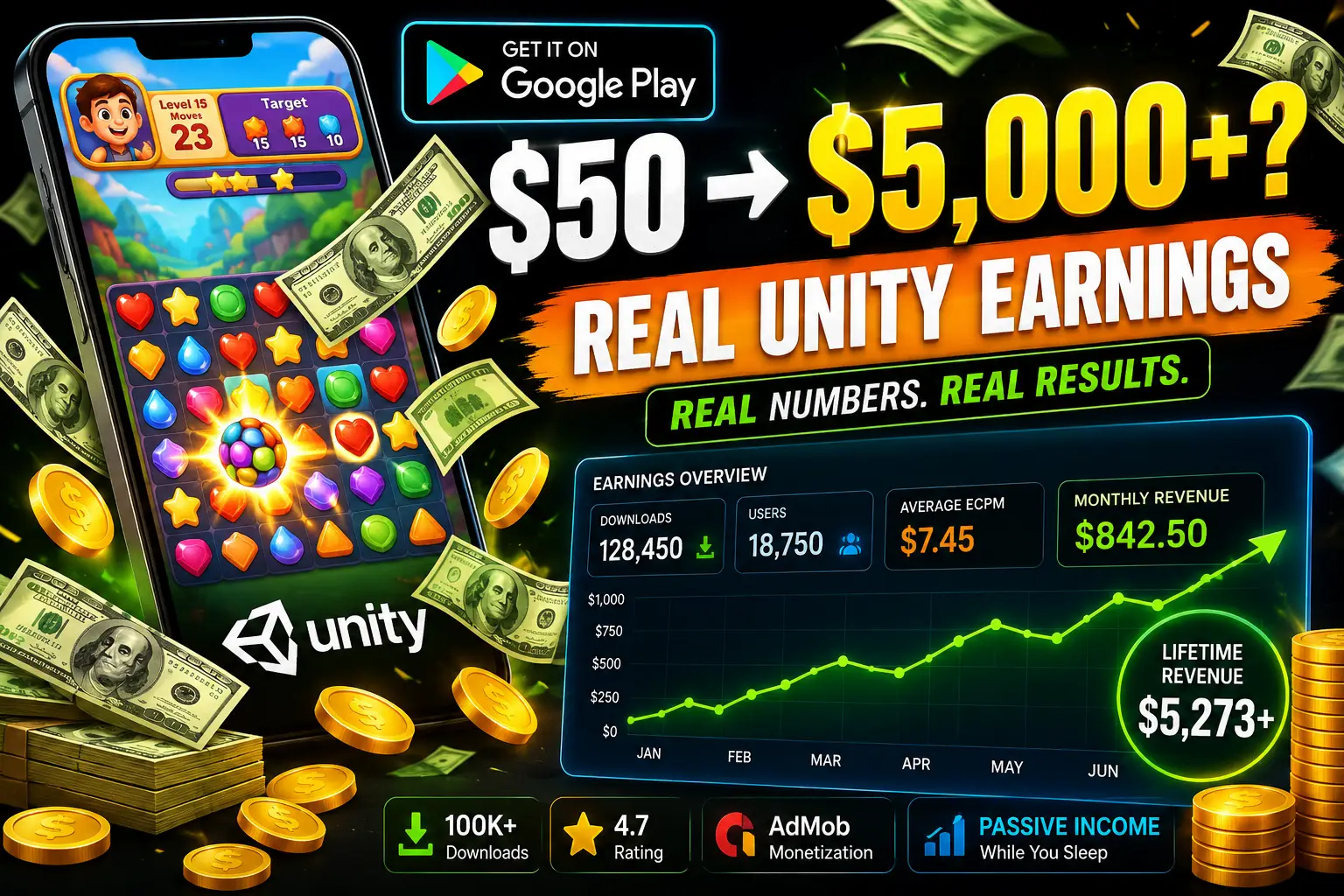
Let's get into the figures. These numbers are based on typical performance ranges reported by indie developers and reskin publishers across forums, marketplaces, and case studies — not inflated "guru" promises.
Key takeaway: Most individual reskins earn modestly — often $20 to $500/month. The real money in this business comes from volume and iteration, not a single lucky title.
Not every genre performs equally when reskinned. Based on current Google Play trends, these categories consistently show strong ad revenue potential:
If you want to explore more proven templates, browse our full Unity games category or check the complete Unity source code products catalog to compare genres before you pick your next reskin.
Reskinning gives you a head start, but it doesn't guarantee income. These five factors matter far more than the source code itself:
A polished, bug-free, well-optimized Unity template performs dramatically better than a poorly coded one — even after reskinning. This is why choosing a reliable source is critical. See our picks in best Unity projects for new developers if you're unsure where to start.
Your icon, screenshots, title, and description directly affect your organic install rate. Two identical games can perform 5–10x differently based on ASO alone.
A well-configured AdMob mediation stack (with multiple ad networks competing for impressions) can boost your eCPM significantly compared to a single-network setup.
Even $50–$100 in Facebook or TikTok ads can jumpstart your download numbers enough to trigger organic momentum through the Play Store algorithm.
Professional reskin publishers rarely bet on one title. They publish 10, 20, or even 50 reskins from different templates and scale whichever ones perform best — cutting losses on the rest.
Here's a simple, honest projection for someone starting with one well-made reskin, minimal marketing budget (under $100), and consistent ASO effort:
| Month | Downloads | Est. Monthly Revenue |
|---|---|---|
| Month 1 | 200 – 800 | $5 – $30 |
| Month 2 | 500 – 2,000 | $20 – $100 |
| Month 3 | 1,000 – 5,000 | $50 – $300 |
Scale this across 4–5 different reskinned templates published over a few months, and a realistic combined monthly income of $300 – $1,500 is achievable for a dedicated solo developer within the first year — without needing to go viral.
Yes — but with realistic expectations. The days of publishing a barely-changed template and earning thousands overnight are largely gone as the Play Store has matured and competition has increased. However, reskinning remains one of the lowest-risk, fastest ways to enter mobile game publishing, especially when combined with:
For beginners, it's still one of the smartest ways to learn real-world app publishing, monetization, and marketing — skills that pay off even beyond any single game's revenue.
So, how much can you really earn selling a reskinned Unity game on Google Play? For most beginners, the honest answer is $20–$500 per month per game in the early stages, with the potential to scale into the thousands as you publish more titles, improve your ASO, and reinvest in marketing. Viral hits happen, but they're the exception — consistent, modest income from a growing portfolio of reskins is the realistic path to success.
If you're ready to start, explore our full collection of ready-to-reskin Unity source code templates visit the UnitySourceCode to see our latest releases and get your first project running today.
Have questions about reskinning, AdMob setup, or choosing the right template for your first game? Explore more guides on our blog or browse our Unity games collection to find your next project.



