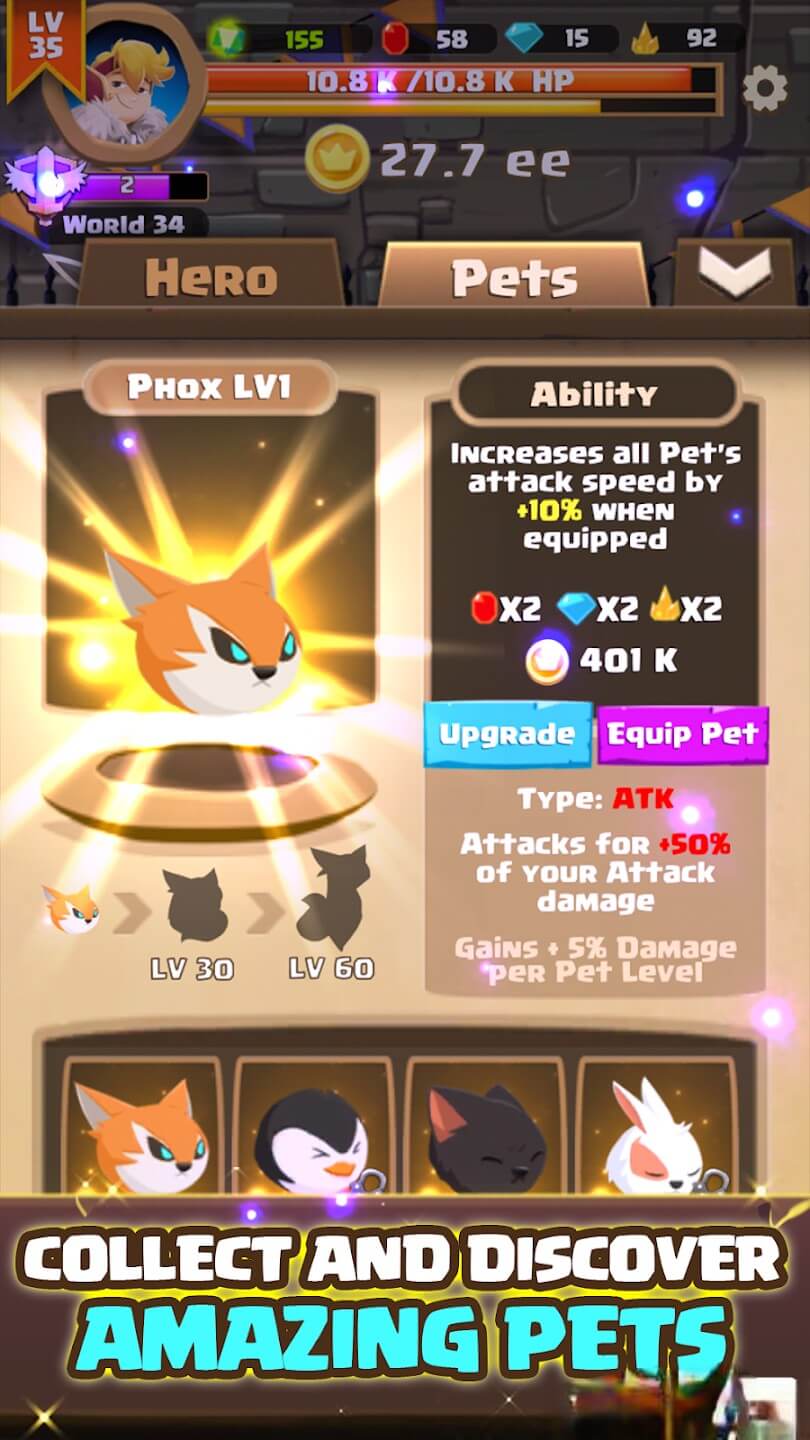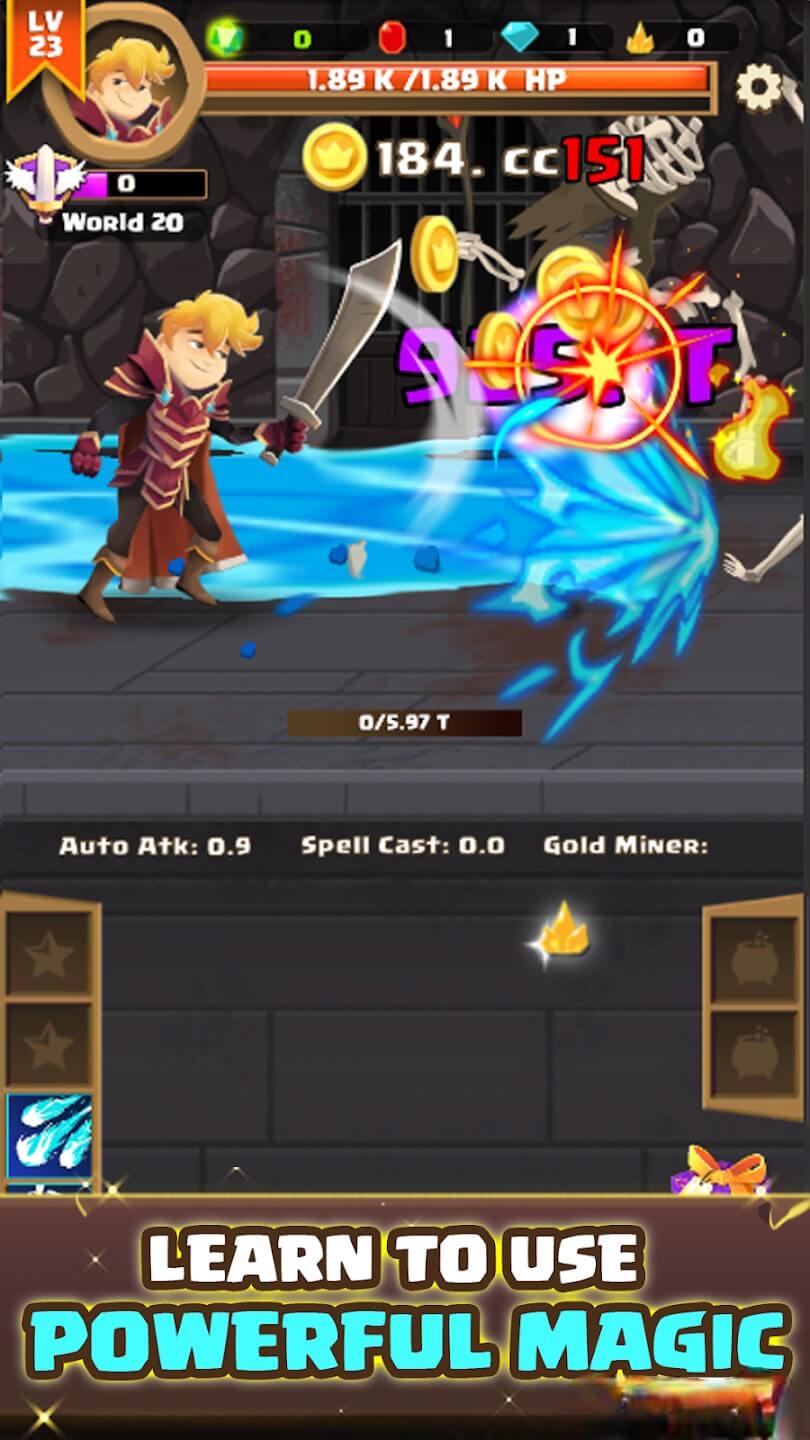

There's a reason idle and incremental games have quietly become one of the most profitable genres on mobile. They don't ask for much attention, but they never fully let go of it either. Clicker Knight Incremental is built entirely around that psychology — a tap-to-fight, idle-to-grow RPG where the numbers always creep upward, even when the player isn't looking.
If you've ever opened a clicker game "just to check progress" and stayed for twenty minutes, you already understand why this genre keeps developers coming back to build more of them.
At the center of this template sits a single obsession: growth. Every tap deals damage, every upgrade compounds, and every returning session shows a bigger number than the last. That constant forward motion is what keeps a clicker game from ever feeling finished — there's always a slightly bigger milestone one upgrade away.
Mechanically, this plays out through:
None of this requires the player to think hard. That's the point — clickers succeed by removing friction, not by adding depth.
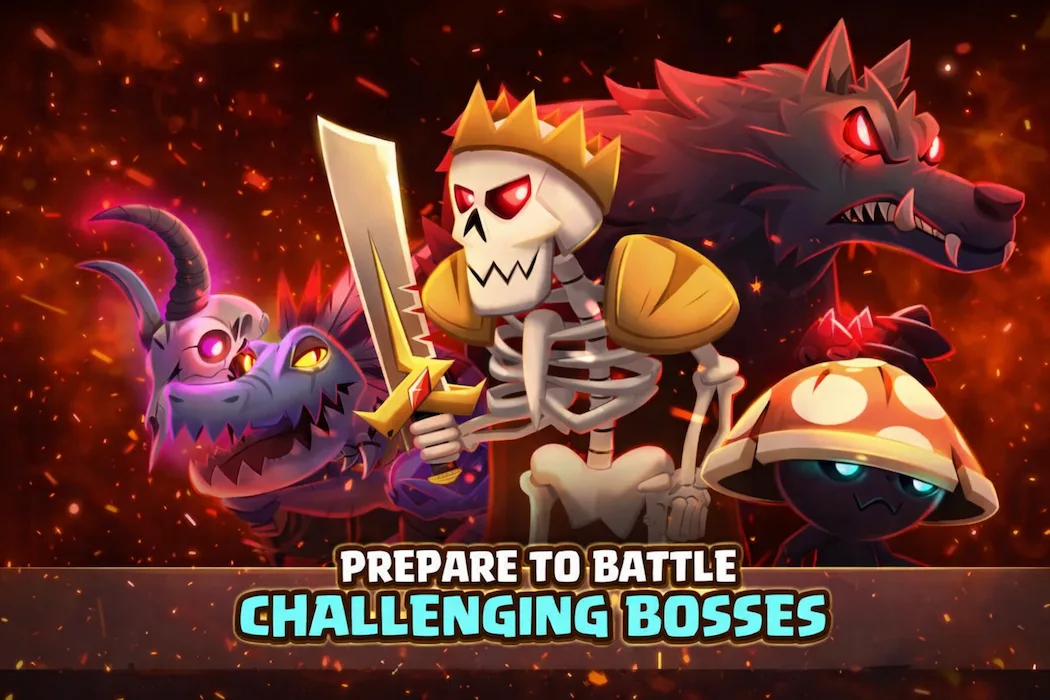
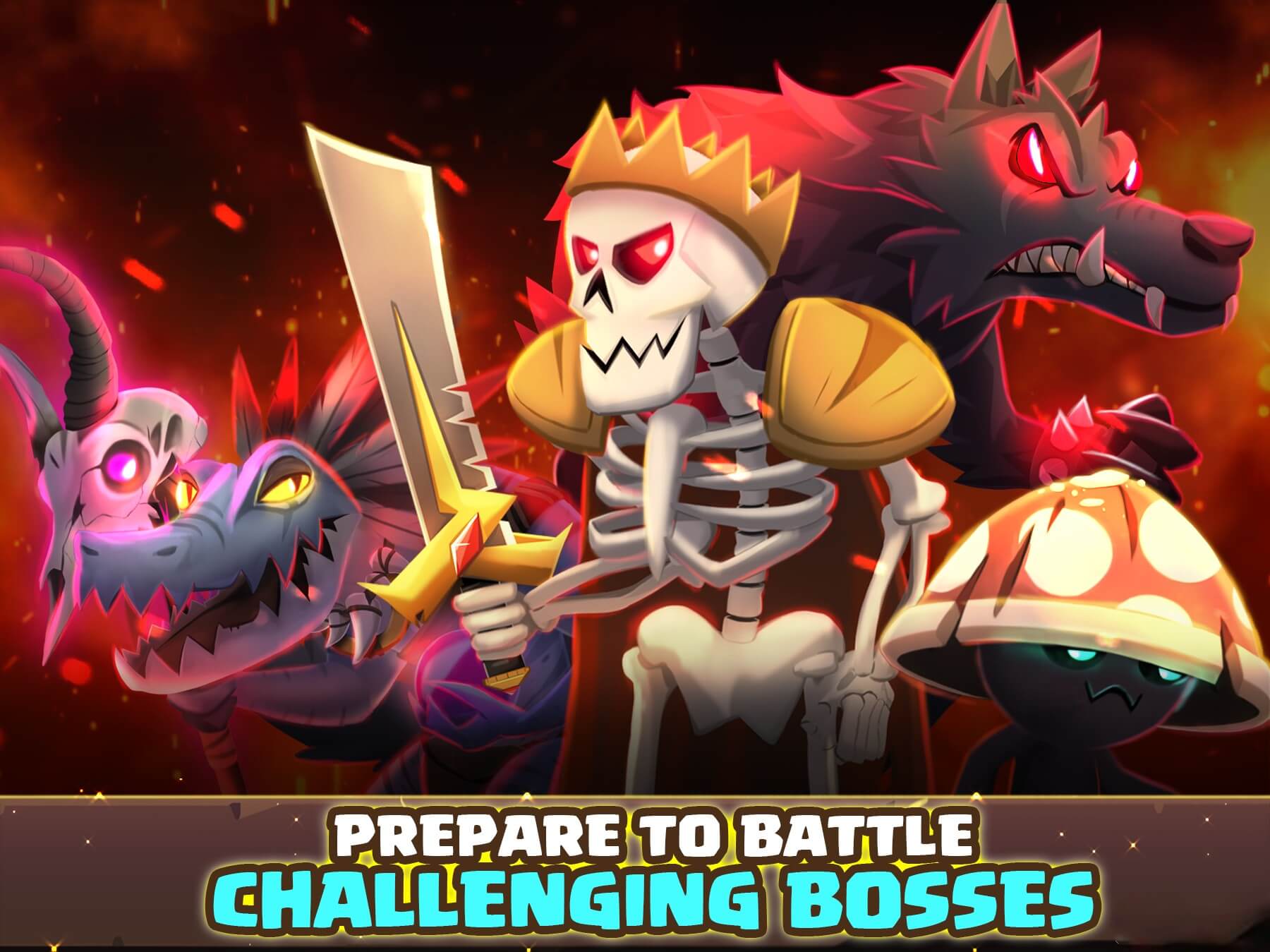
Pure number-climbing eventually gets monotonous without something to punctuate it. That's where boss encounters come in. Each boss acts like a checkpoint — a wall that forces the player to actually use their accumulated upgrades rather than just watching numbers tick up passively.
Beating a boss doesn't just reward the player, it re-validates the last twenty minutes of tapping and idling. Without that periodic payoff, incremental games tend to feel like watching a progress bar. With it, they feel like actually playing something.
What makes the idle-clicker hybrid model so durable is that it serves two very different kinds of players at once. Someone who wants to actively tap through a session gets instant feedback and control. Someone who just wants to check in once a day gets meaningful passive progress waiting for them. Neither player is left behind, and that dual accessibility is a big part of why incremental games retain so widely across different play habits.
This is a very different retention philosophy than something like a twitch-reflex arcade title. Compare it to Neon Run, where engagement depends entirely on split-second timing during active play — there's no idle layer to fall back on. Clicker Knight deliberately builds in that safety net so the game keeps producing value even when the player isn't touching the screen.
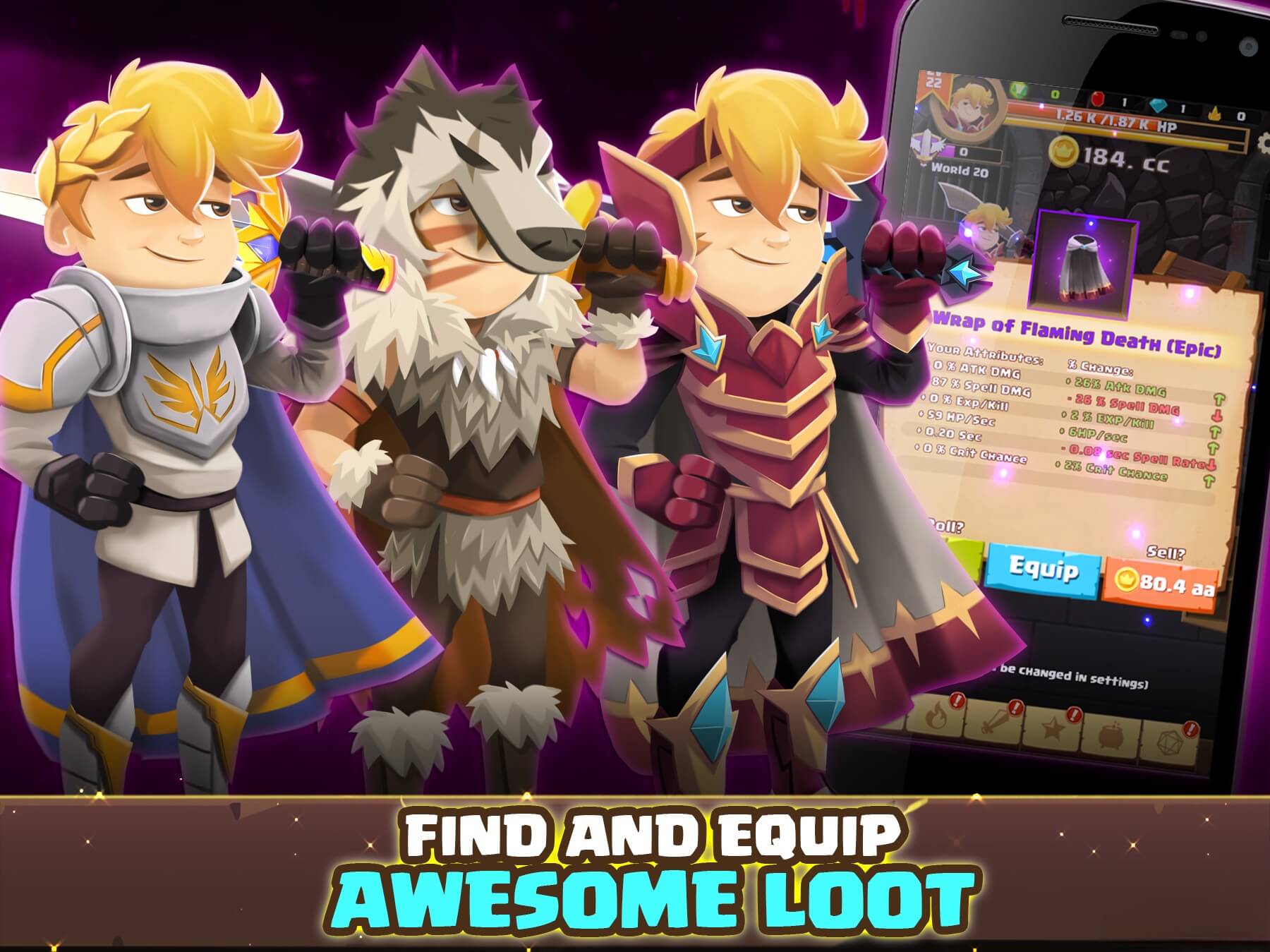
Depth in a clicker doesn't come from complexity — it comes from stacking simple systems on top of each other. This template spreads progression across:
Each layer is easy to understand on its own, but together they create the sense of a genuinely deep progression system without ever asking the player to make a complicated decision.
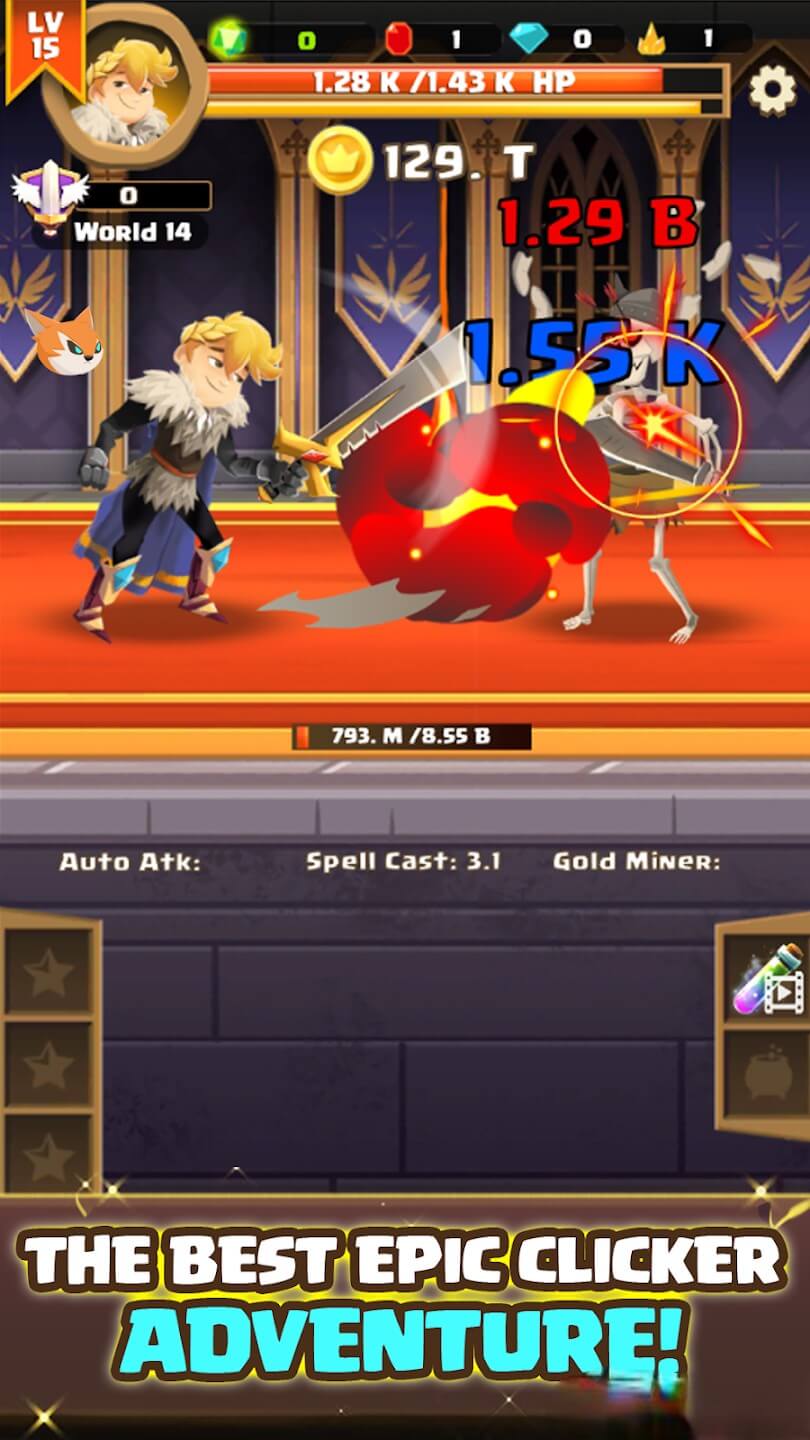
Visually, the template keeps things clean — clear damage numbers, readable progression bars, and RPG-style UI elements that communicate status at a glance. That simplicity is intentional. Idle games are often played in short glances rather than focused sessions, so the interface needs to communicate "here's how much you've grown" almost instantly, without requiring the player to parse anything.
Clicker games rarely stay static for long — successful ones get new stages, new bosses, and new upgrade tiers added on a regular cadence to keep the number-climbing fresh. The project is structured with that lifecycle in mind:
This matters more here than in a lot of other genres, because a clicker game's shelf life is directly tied to how easily you can keep feeding it new content.
Idle games are famously ad-friendly, mostly because players are already used to trading a short ad for a meaningful boost. The monetization layer here reflects that:
None of these interrupt the core loop — they simply give players a way to speed up the number they're already chasing.
The base template is a complete product on its own, but it's also a foundation for something larger. Developers who want to push further commonly add:
Each of these builds naturally on the existing progression systems rather than requiring a separate game to be bolted on.
Every mobile genre is really just a different answer to the same question: how do you keep someone opening the app? A tower-defense-style survival game like Neighbor vs Monsters answers that with escalating threat and defense planning. A fast platformer like Ninja Rian answers it with skill mastery and level completion. An exploration title like Octopus World answers it with curiosity and discovery. Clicker Knight answers it with compounding numbers and the quiet satisfaction of watching a stat get bigger than it was yesterday. None of these approaches is superior — they're just different psychological levers, and knowing which one you're pulling shapes everything else about how you build and market the game.
If raw physical intensity and momentum-driven play is more your interest, it's also worth checking how a vehicle-based title like Offroad Outlaws handles its own progression-through-upgrades loop — a surprisingly similar structure dressed in a completely different genre.
Idle RPGs are just one lane in a much wider catalog. If you're weighing this concept against other genres before committing, it's worth browsing the full games category to compare mechanics, monetization models, and art styles side by side. And if you're new to the marketplace itself, the homepage is a good starting point for seeing what's currently trending across the whole catalog.
For a broader perspective on why buying a template like this tends to get a game to market faster than building from scratch, it's worth reading why Unity source code is the fastest way to build and launch games — the short answer is that the hardest, most time-consuming systems (progression math, save states, UI scaling) are already solved here.
Clicker Knight Incremental isn't trying to reinvent the idle genre — it's executing the formula that already works, cleanly and completely. Tap-based combat, meaningful idle progress, boss-driven milestones, and a monetization structure that fits naturally into how players already behave in this genre. For developers who want a fast route into one of mobile's most consistently profitable categories, that's exactly the point.
What's the difference between a clicker and a full idle RPG? A pure clicker relies almost entirely on tapping for progress. Clicker Knight blends that with idle mechanics, so players earn meaningful progress even when they're not actively playing, which is closer to a hybrid idle RPG than a simple tap game.
Do I need RPG design experience to customize this template? No. The progression systems are built with adjustable values and modular scripts, so you can tune difficulty curves and upgrade paths without deep RPG design background.
Can I add new bosses without rebuilding the combat system? Yes. The project is structured so new bosses and stages can be added on top of the existing combat and progression logic without reworking the core systems.
Is this template better suited to Android, iOS, or both? It's built to support both platforms, following standard Unity mobile deployment practices for each.
How does monetization typically work for idle games like this? Most idle titles combine rewarded ads for temporary boosts, interstitial ads between stages, and optional in-app purchases for faster progression — all of which this template is structured to support.
Can this be expanded into a bigger RPG with equipment and skill trees? Yes, the codebase is designed to support additions like inventory systems, skill trees, and companion mechanics as the project grows.
Will this game run smoothly on lower-end mobile devices? The visual design is intentionally simple and optimized for performance, which helps it run consistently across a wide range of device specifications.
Does the purchase include documentation and support? Yes, documentation is included, and support is available depending on the license tier chosen at checkout.
You need to login to comment!
Total Sold:
0
Total Comments: