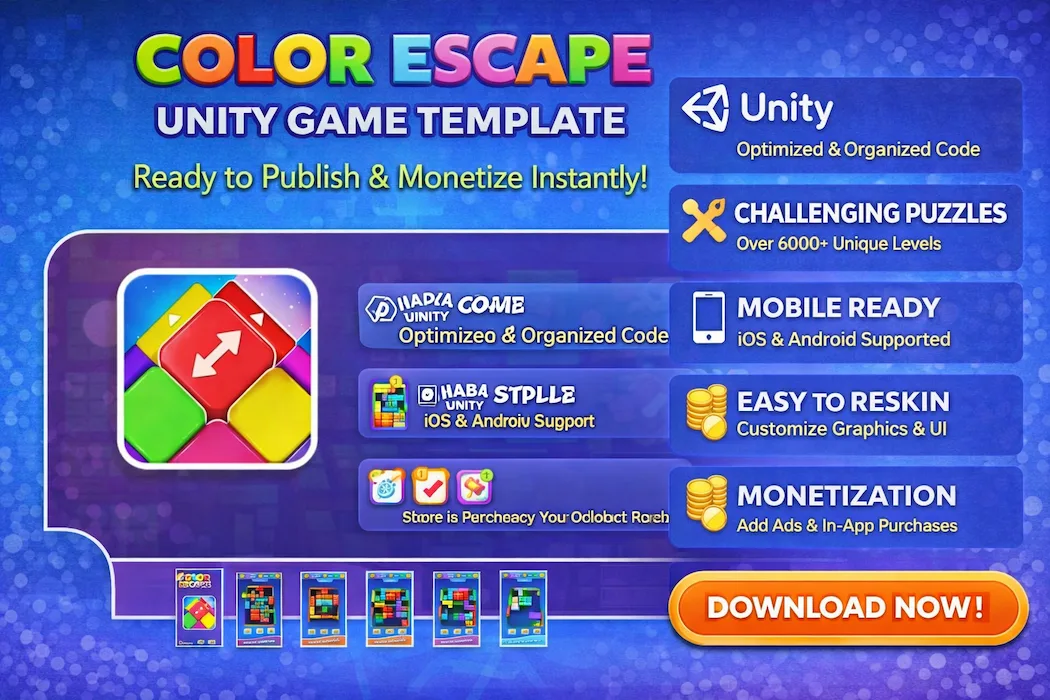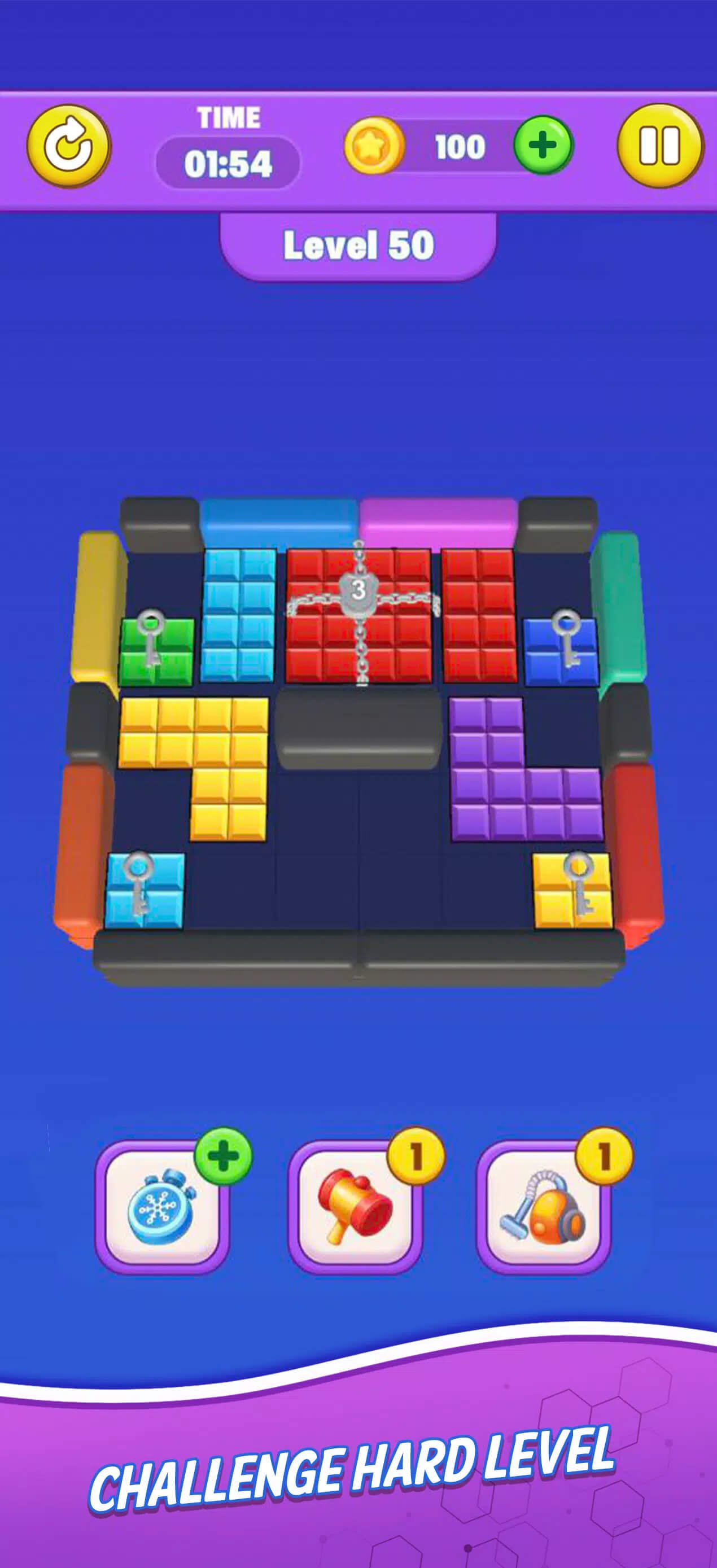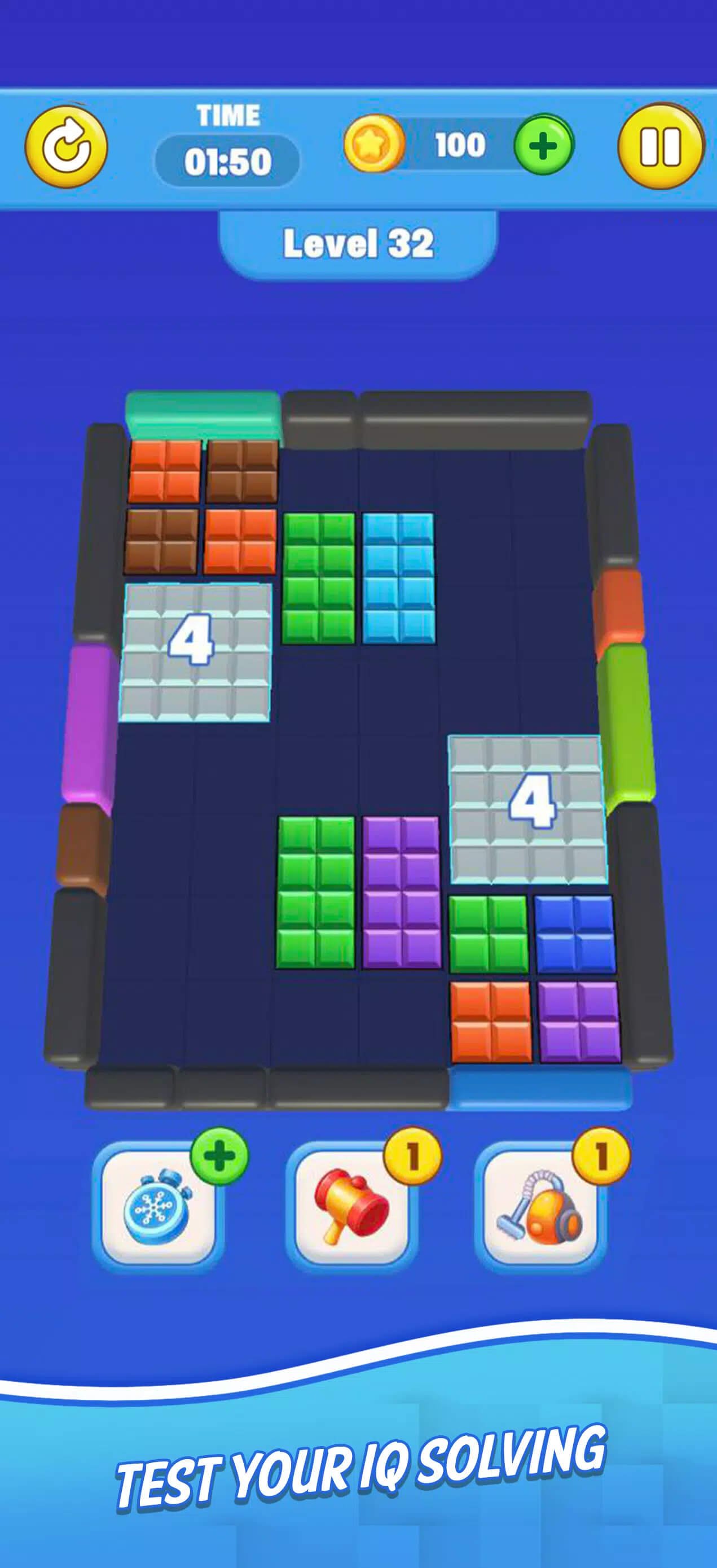

That's the whole design philosophy behind Color Escape Unblock Jam.
At first glance, it's a sliding block puzzle. Colored pieces on a grid, one target exit, one objective: get the right block out. Players understand the concept within seconds. They don't need a tutorial — they just start moving.
But within a few levels, something changes. The grid tightens. More blocks appear. The exit starts to feel impossibly far. What seemed like a quick casual game turns into a genuinely engaging brain challenge — the kind players come back to between meetings, during commutes, and right before bed.
That quality — easy to pick up, hard to put down — is exactly what drives strong mobile game retention. And it's exactly what this Unity source code is built to deliver.
The unblock genre has been one of the most consistently successful puzzle formats on both Google Play and the App Store for years. The core mechanic never goes out of style because it taps into something fundamental: the desire to solve. Players feel smart when they crack a difficult arrangement, and that feeling keeps them coming back.
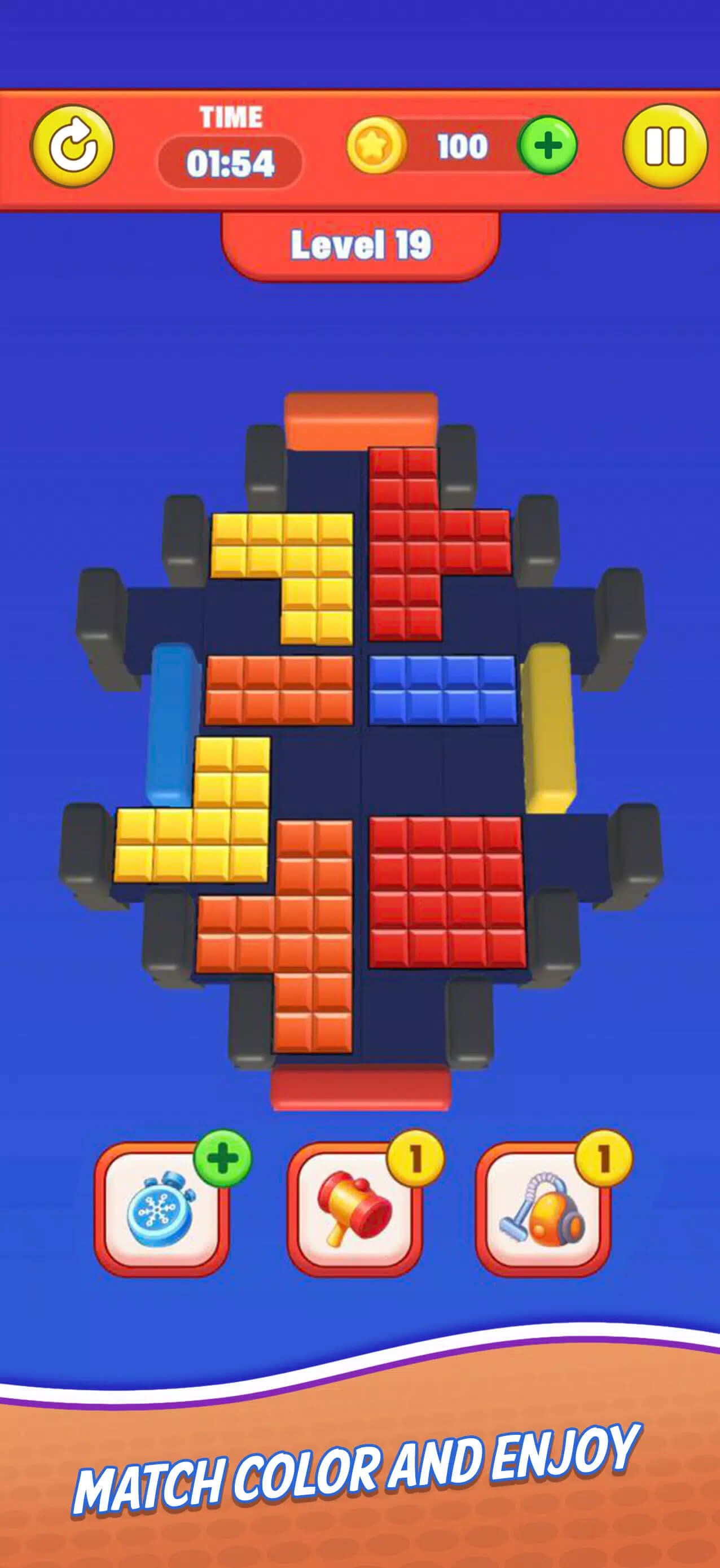
Color adds another layer entirely. When block movement is tied to color logic — matching, routing, sequencing — players are solving two problems at once: spatial and visual. It's satisfying in a way that purely spatial puzzles aren't.
Developers who understand this tend to move fast. They don't build puzzle engines from scratch — they start with a proven Unity template and focus their energy on level design, monetization, and App Store optimization. If you want to understand exactly why that approach works, our blog post on Why Unity Source Code is the Fastest Way to Build and Launch Games walks through the full reasoning — from development speed to revenue strategy — and it's required reading before you spend months building something that already exists.
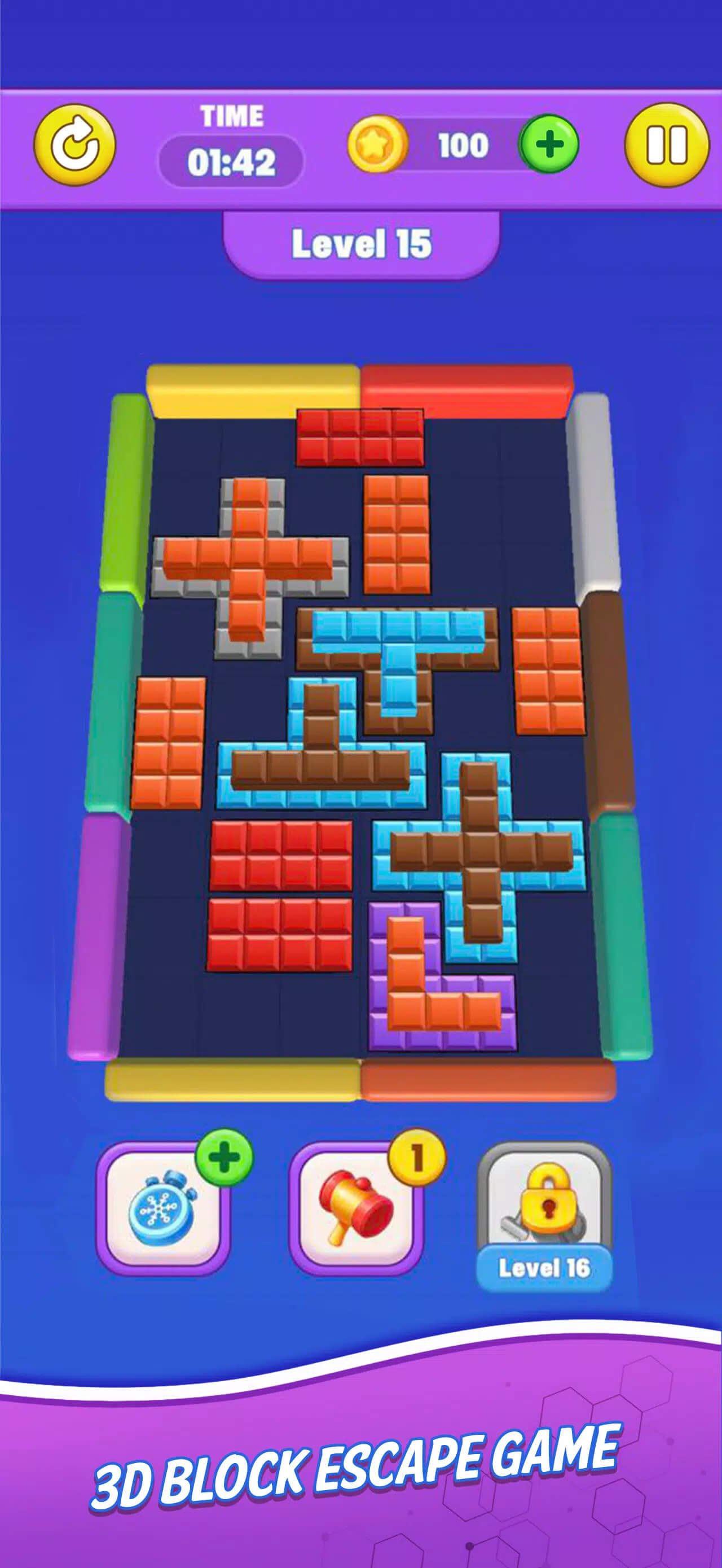
This is not a flat 2D board. The game runs in a fully realized 3D environment — camera angles, depth, lighting, and block animations all combine to give the puzzle weight and presence. On a mobile screen, that visual quality is the difference between a game that gets deleted after two minutes and one that earns a 4-star review.
The environment is optimized for performance across a wide range of Android and iOS devices. Fast load times, smooth transitions between levels, and responsive touch controls are built into the foundation — not bolted on afterward.
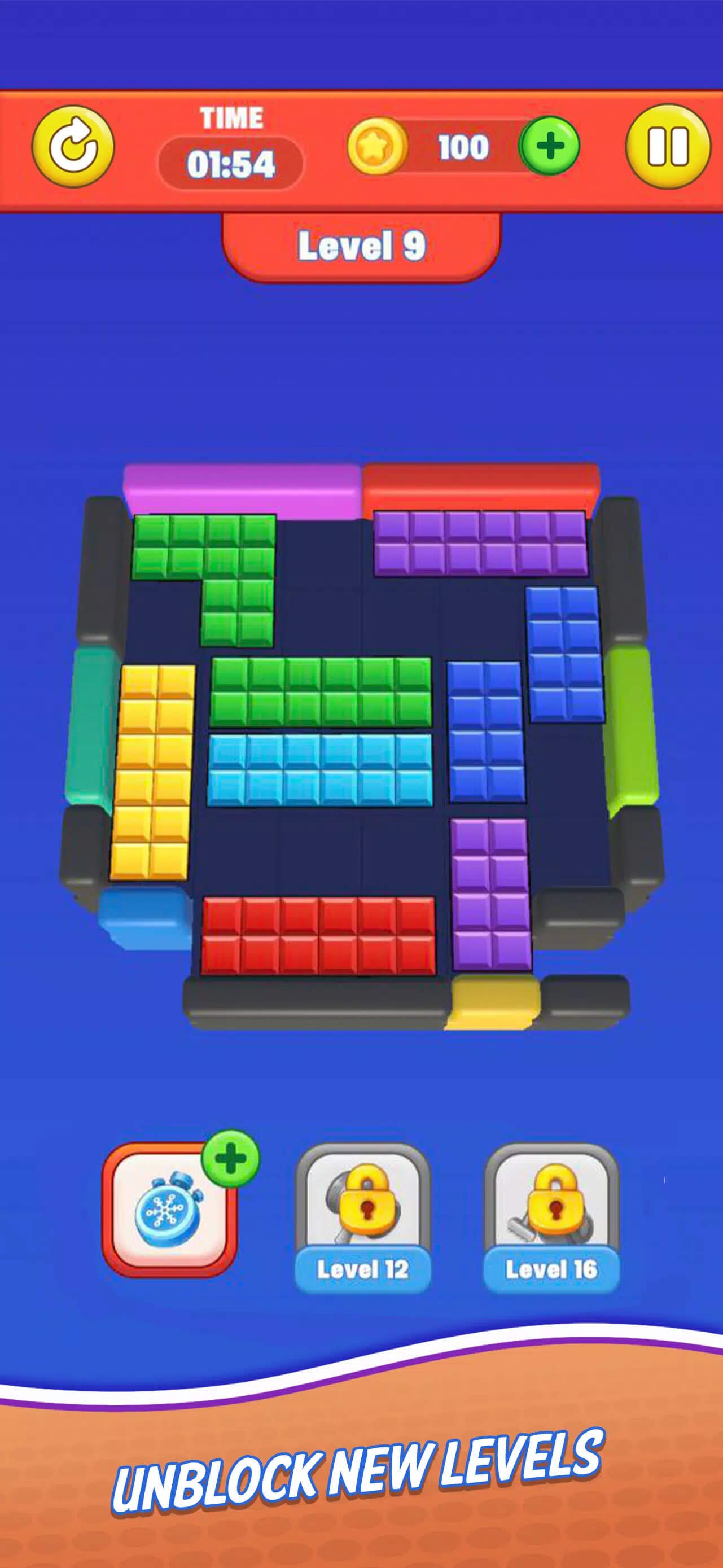
The gameplay introduces color sorting mechanics alongside the spatial sliding challenge. Early levels ease players in with simple arrangements. Mid-game, the grid grows more complex: multiple exit points, intersecting paths, blocks that can only move in one direction. Late-game levels are legitimately difficult — the kind that players screenshot and send to friends.
This natural difficulty curve is what creates long-session play and drives level completion metrics that app store algorithms reward.
The level-based structure creates natural breakpoints for ad placement. The template supports:
These aren't afterthoughts. The ad system is integrated into the project architecture from the ground up, which means you're not retrofitting monetization into a finished game — you're publishing one that was designed to earn.
Every visual element — block colors, grid textures, background environments, UI fonts, icons — is modular and replaceable. Want to theme it as a neon cyberpunk puzzle? An ancient stone maze? A children's color-sorting toy? The structure handles all of it.
Developers building a portfolio of games will find this particularly useful. One clean codebase, many possible products, minimal rebuild time between releases.
The project has been updated to Unity 6 and includes bug fixes from the original release. Scripts are organized by system — input handling, block movement, level loading, ad management — so each piece is understandable and independently modifiable.
Whether you're an experienced developer adding features or a beginner trying to learn how a real puzzle game works under the hood, the code structure respects your time. It reads like a codebase someone actually maintains.
The base template gives you a complete, publishable game. What you build on top of it is up to you. Some directions worth considering:
Daily Challenge Mode — generate a new hand-crafted puzzle every day and give players a streak-based reason to return.
Hint Economy — let players earn coins through play and spend them on progressive hints. A strong hint system reduces frustration and keeps players in the game longer.
Timed Puzzles — add a countdown clock to select levels for players who want a harder challenge format.
Theme Packs — unlock new visual environments at milestone levels. Seasonal themes (holiday, summer, night mode) are easy to implement and give marketing hooks for App Store featuring.
Leaderboards — connect to Google Play Services or Apple Game Center for weekly puzzle rankings.
Each of these can be layered onto the existing codebase without restructuring anything.
If Color Escape Unblock Jam is going to be one title in a larger publishing strategy, the games library has plenty of strong companions across different genres. Developers expanding into action and strategy territory will find Screw Sort 3D – Color Sorting Puzzle is a natural genre neighbor — same color-sorting logic, different mechanical format, different audience overlap. For something more fast-paced, Frog Ninja Revengeance – Action and Tomb of the Mask – Hyper Casual cover the arcade and reflex side of the casual gaming market.
Developers who want to experiment with simulation and management mechanics will find Diner Dreams – Fast Food Simulator and the viral humor angle of Meme vs Rage – Tower Defense are both strong performers in their categories. And if you specifically want to stay in the vehicle-puzzle lane — the closest genre relative to Color Escape — Drive Quest Puzzle – Car Parking is essentially a traffic-clearing puzzle with a different skin, and the two titles together make a compelling puzzle game bundle for any storefront.
The key insight that experienced mobile publishers already know: a single genre focus limits your audience. Puzzle players also play hyper-casual. Simulator fans play idle games. Building across genres — even with templates in the same price range — multiplies your total addressable player base without multiplying your development cost.
| Detail | Info |
|---|---|
| Engine | Unity 2021+ (Updated to Unity 6) |
| Platforms | Android 9.0, 10.0, 11.0, 12.0 / iOS |
| Includes | APK, Documentation, PNG Assets |
| Tags | AdMob, 2D Art, Puzzle |
| Last Updated | May 22, 2026 |
| Release Date | April 16, 2025 |
| Regular License | $45 $199 — Future updates, 3 months support |
| Extended License | $999 — Future updates, 6 months support, extended rights |
| Add-ons | Reskin ($999), iOS Publish (+$149), ASO (Basic $29 / Standard $49 / Premium $99), Custom Branding (+$99) |
Building a color puzzle game from scratch — the engine, the block physics, the grid system, the level editor, the ad SDK, the monetization flow, the UI — takes months. Using Color Escape Unblock Jam as your starting point takes days.
That's not a sales pitch. It's just the math of game development in 2026. The developers shipping consistent, profitable mobile games are not the ones who rebuild everything from first principles every time. They're the ones who start with strong foundations and spend their time on what actually differentiates their product: levels, art direction, store presence, and player feedback.
You need to login to comment!
Total Sold:
0
Total Comments: