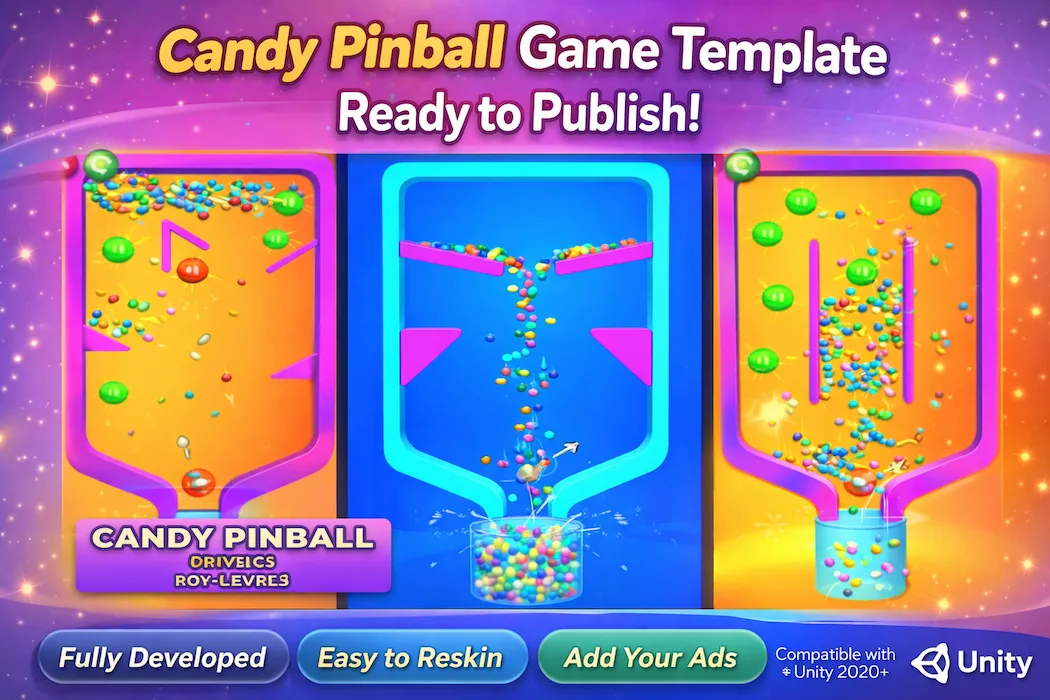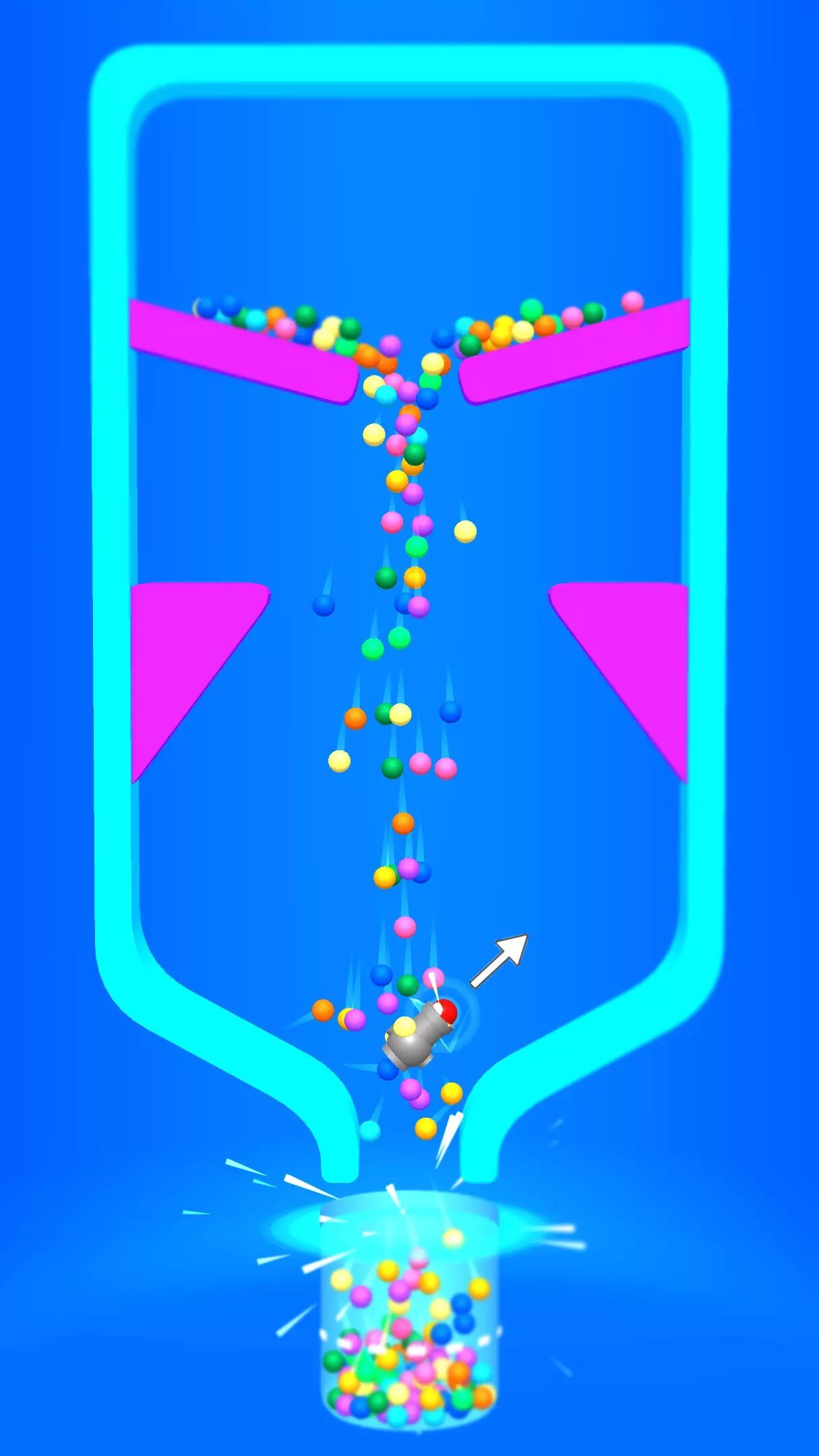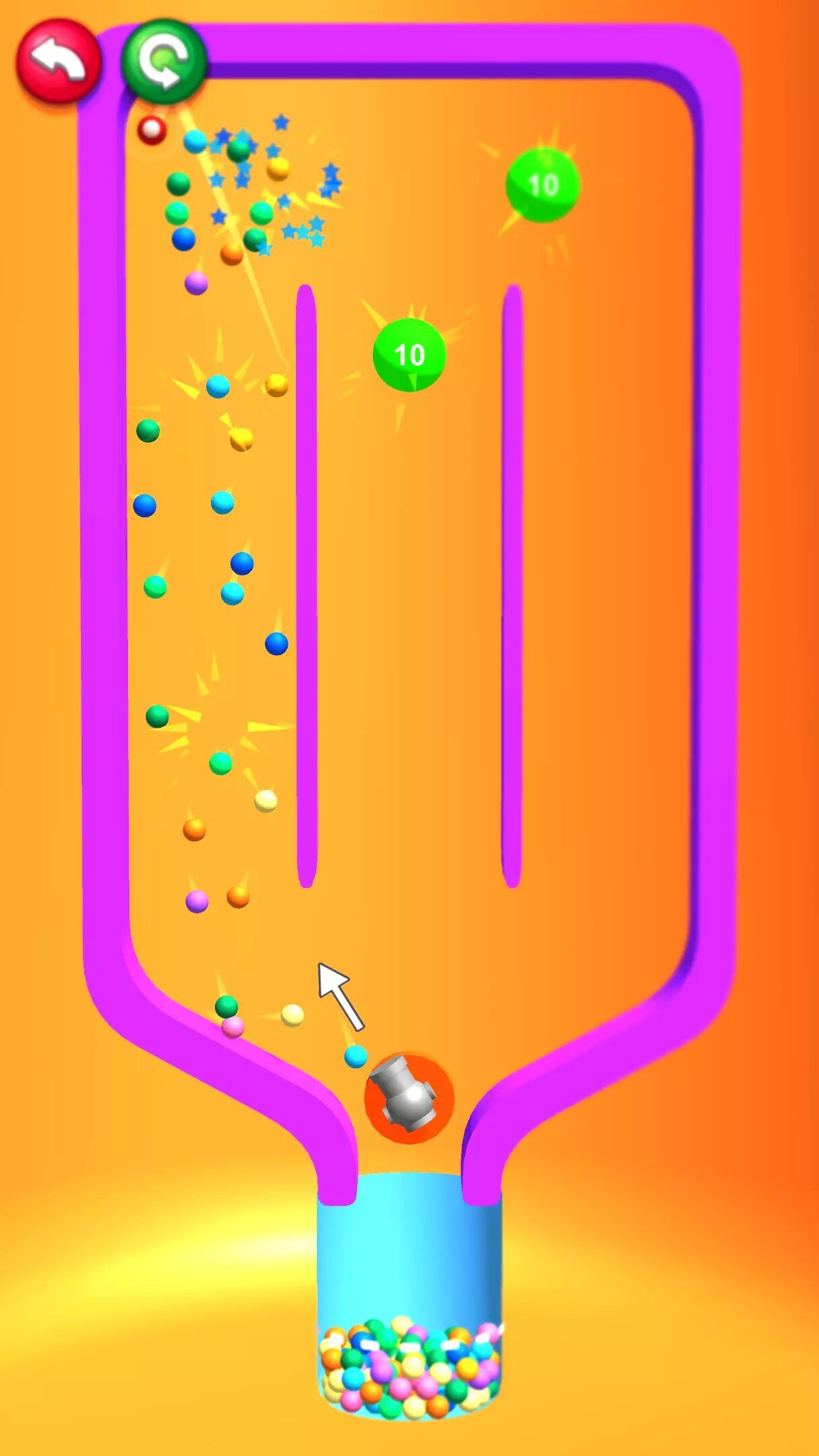

Pinball is one of those genres that never really goes out of style — it's been reinvented across decades of hardware, and the core appeal has barely changed: launch the ball, control your flippers, chase the combo. Candy Pinball takes that timeless formula and wraps it in a bright, candy-themed visual style built specifically for mobile screens, giving developers a genre with proven staying power rather than an unproven experiment.
Players launch the ball, work the flippers with precise timing, and aim for targets, bumpers, and scoring combos — the exact loop that's kept pinball machines profitable in arcades for generations, now packaged as a complete Unity project ready for mobile publishing.
Unlike a lot of casual mobile mechanics that lean on randomness, pinball rewards precision. That distinction matters for player engagement:
That's a meaningfully different engagement model than pure luck-based mechanics, and it tends to attract a more competitive, high-retention player base.
A pinball game lives or dies on how its physics feel. Sloppy collision detection or unresponsive flippers will sink the entire experience regardless of how good the art looks. This template addresses that directly:
Getting this part right is the single biggest differentiator between a pinball game that feels genuinely good to play and one that feels like a rough approximation of the real thing.
Arcade-style games like this one are naturally suited to ad-based revenue models, since players tend to come back for short, repeated sessions chasing a better score:
If you want a clearer sense of what kind of revenue a well-executed reskin in this space can realistically generate, this breakdown of how much you can earn selling a reskinned Unity game walks through real numbers and expectations worth reviewing before you finalize your monetization plan.
The candy theme is just the starting point — this project is built to be reshaped into whatever visual identity fits your vision:
That last point is particularly useful if you're thinking beyond a single release — a flexible core system like this one supports an entire family of themed pinball games rather than just one.
Good presentation only gets you so far if the code underneath is a mess to work with. This template avoids that problem:
Clean architecture like this is what actually saves development hours — more than the mechanics being pre-built in the first place.
Once your base build is running, there's plenty of room to grow the experience further:
Regular content updates like these don't just keep existing players engaged — they also tend to help your app's ongoing visibility in store search results, since consistent updates are a signal most app stores reward.
Do I need prior experience with physics-based games to work with this template? No. The physics system is already tuned and functional out of the box. You don't need deep expertise in Unity's physics engine to customize the visuals or adjust scoring — that groundwork is already done for you.
What Unity version does this project use? The template has been updated to Unity 6, along with a round of bug and error fixes, so you're starting from a current, actively maintained build rather than an outdated version.
Can I completely change the candy theme, or is the pinball table structure locked in? You can redesign the visual theme entirely. The candy aesthetic is the default presentation, not a fixed requirement — the underlying table structure, scoring zones, and mechanics all support a full visual overhaul.
Is monetization already integrated, or do I need to build it from scratch? The structure for rewarded and interstitial ad integration is already in place. You'll need to connect your own ad network account and configure specific ad units, but the architectural groundwork is already done.
Will this run smoothly on both Android and iOS? Yes, cross-platform performance was part of the original build, with consistent physics and controls across both operating systems.
Is this a good base for building more than one pinball game? Yes — because the scoring systems, table layout, and visual theme are all modifiable independently, developers commonly use a template like this as the foundation for several distinct pinball releases rather than a single one-off game.
How do I decide if pinball is the right genre for my next release? If you're still weighing genre options, it's worth reading through this guide on how to choose the right Unity game genre before committing, since genre fit has a significant impact on both development effort and long-term monetization potential.
Where can I see the gameplay before purchasing? There's a video walkthrough available here showing the core mechanics and physics in action.
What support is available after purchase? You can reach the support team directly through Unity Source Code's Team contact for setup or technical questions.
If arcade-style pinball isn't quite the exact fit for your next release, a few other templates are worth considering:
Developers who enjoy skill-based mechanics will appreciate that this genre rewards genuine player improvement rather than relying purely on random outcomes, which tends to build a more dedicated, longer-retained player base.
Studios building an arcade-focused portfolio can use this as a strong entry point into physics-based gameplay, expanding later into additional tables or themed variants without rebuilding the underlying system.
Developers targeting a nostalgic audience will find pinball's decades-long track record works in their favor — this isn't a genre that needs to prove itself, just execute well, which is exactly what a polished template like this supports.
Freelancers delivering client projects get a dependable, already-functional physics system they can quickly rebrand, sidestepping the significant engineering time it typically takes to get ball physics feeling right from scratch.
For developers who like a concrete plan rather than an abstract pitch, here's a reasonable timeline for taking this template from purchase to a submittable build:
That's a realistic pace for a solo developer working part-time, and it's dramatically faster than building and tuning an original physics-based arcade game from an empty Unity project.
Candy Pinball combines a genre with genuine staying power, physics that actually feel satisfying to play, and a monetization structure built around the repeat-session nature of arcade gameplay. For developers who want to enter the pinball space without spending weeks tuning physics and collision systems from zero, this template delivers a working, polished foundation ready for your own branding and store submission.
Changelog:
Updated to Unity 6
Bug / Error Fixes
Contact us on Skype for technical help
Skype ID: Unity Source Code
Don’t forget to review us!
You need to login to comment!
Total Sold:
0
Total Comments: