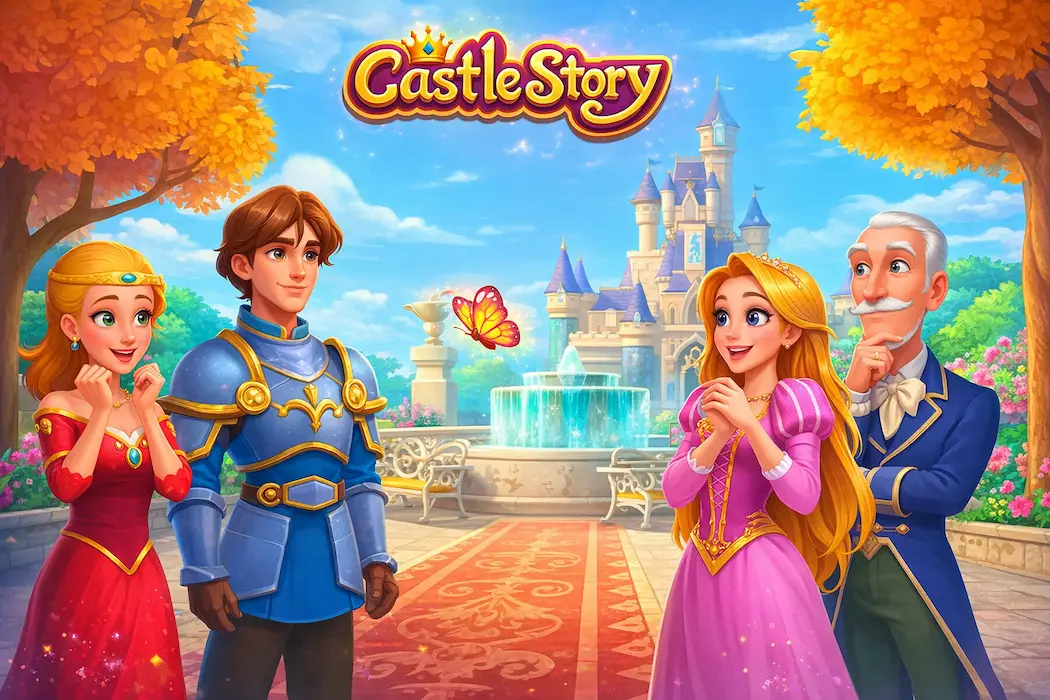

Some match-3 games ask players to solve puzzles for the sake of solving puzzles. Castle Story Game does something smarter — it gives every match a purpose. Rebuild a crumbling kingdom, unlock new castle rooms, and move through a story that actually rewards progress. That single design choice separates it from the dozens of generic match-3 clones flooding app stores today, and it's exactly why this Unity source code is worth a closer look if you're planning your next mobile release.
Whether you're a solo developer hunting for a proven formula or a studio looking to reskin something with staying power, this template gives you a puzzle-adventure hybrid that's already been structured for growth.
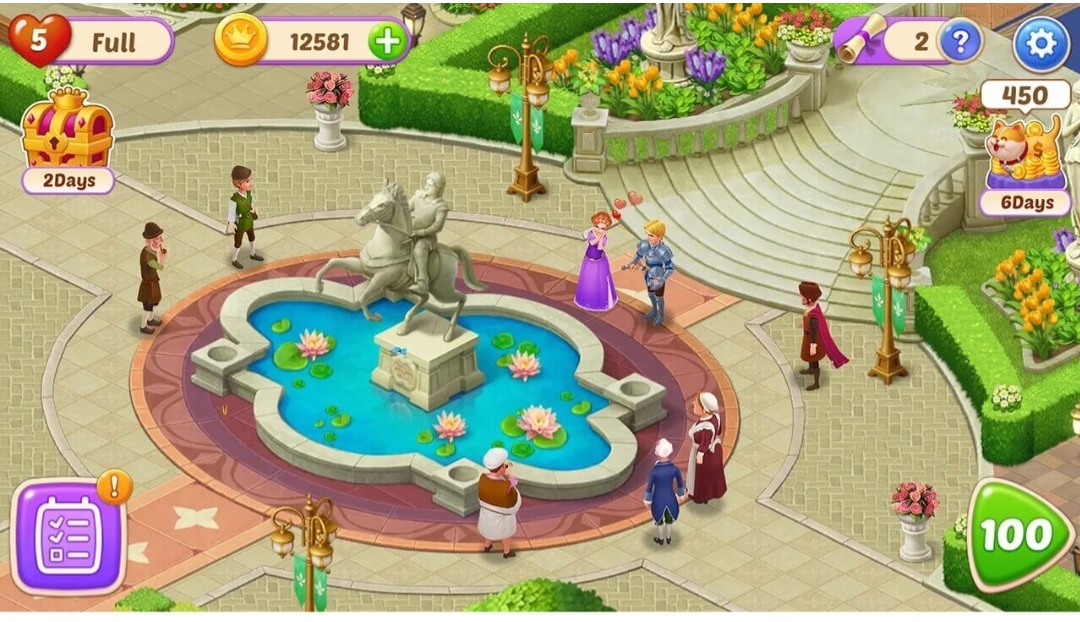
Most casual puzzle games suffer from the same weakness — once the novelty of the mechanic wears off, there's nothing left pulling players back in. Castle Story avoids that trap by tying every match directly to castle reconstruction. Players aren't just chasing high scores; they're watching their kingdom physically transform as they progress.
That loop looks something like this:
It's the same psychological principle behind games like Homescapes and Gardenscapes — visible, tangible progress keeps players emotionally invested far longer than score-chasing alone.
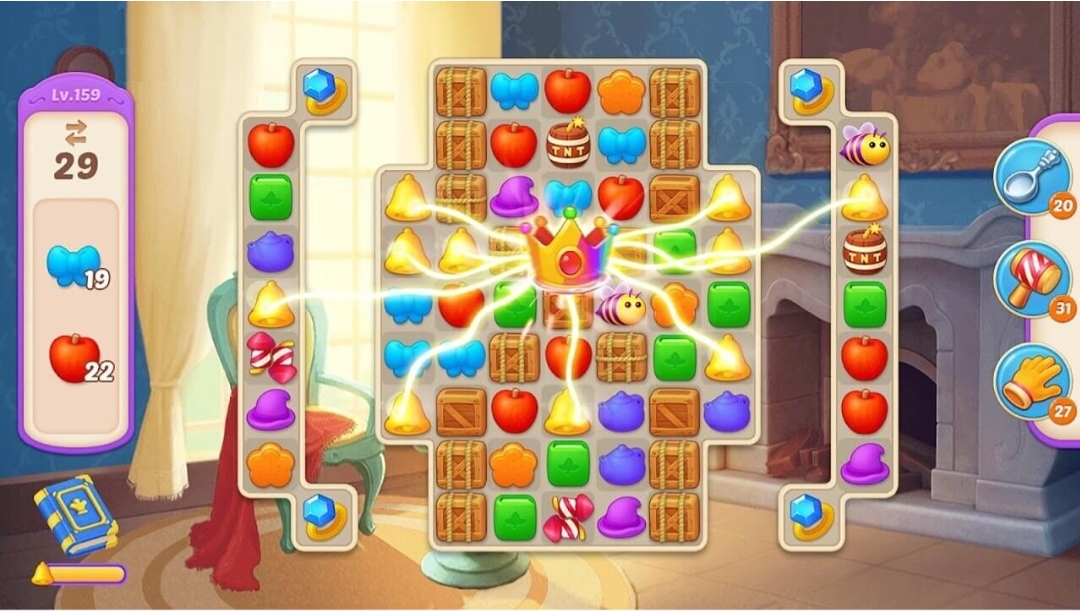
The core swapping and matching gameplay will feel instantly familiar to anyone who's played a match-3 title before, but this template layers in enough complexity to keep things interesting across dozens of levels. Chain reactions, combo triggers, and escalating obstacles all raise the skill ceiling gradually rather than throwing difficulty spikes at players too early.
If you're weighing this genre against others before committing to a build, it's worth reading through how to choose the right Unity game genre — it breaks down exactly why puzzle-adventure hybrids like this one tend to perform well with casual mobile audiences.
Here's where Castle Story really separates itself from typical match-3 templates: narrative progression. As players advance, they unlock story chapters, meet characters, and experience a sense of forward momentum that pure puzzle games rarely offer.
This isn't just decoration. Narrative-driven progression gives players an emotional reason to return beyond "I want to beat my last score." It converts casual dabblers into habitual players — the kind who open the app daily just to see what happens next in the story.
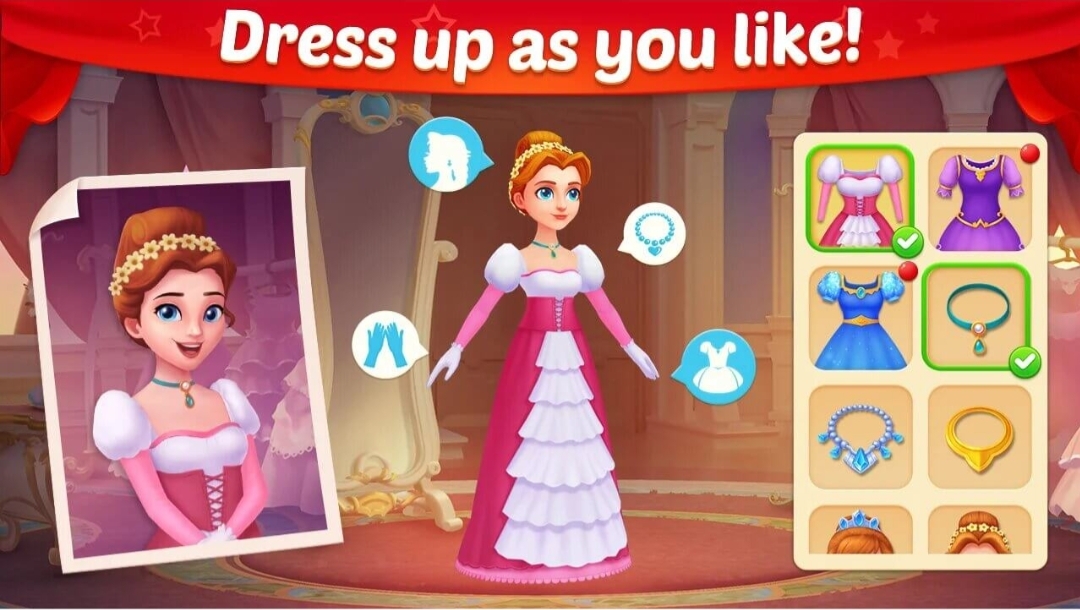
Kingdom and castle aesthetics are common in mobile puzzle games, but execution matters. This template leans into a polished, royal art direction — clean environments, detailed upgrade visuals, and smooth transition animations that make the whole experience feel more premium than a typical low-budget puzzle clone.
That visual polish matters more than developers sometimes assume. In a genre this crowded, first impressions in the app store screenshots and opening minutes of gameplay often determine whether a user sticks around at all.
There's no learning curve here by design:
This kind of frictionless control scheme is critical for casual audiences who expect to understand a game within seconds of opening it — no tutorials required, no confusion, just intuitive play.
If your plan is to take this template and turn it into something entirely your own, the underlying Unity C# structure supports that without a fight. Themes, story content, difficulty curves, UI elements, and progression systems can all be modified independently of each other, which makes customization far less risky than working with a tightly coupled codebase.
This flexibility is particularly valuable if you're exploring how much profit potential exists in reskinning work. For a deeper breakdown of realistic earnings in this space, this article on how much you can earn selling a reskinned Unity game is worth reading before you price your own release.
A puzzle-adventure game with rich visuals still needs to run smoothly on budget Android hardware, not just flagship devices. This template has been optimized for:
None of this is glamorous, but it's the difference between a game that gets five-star reviews and one that gets uninstalled after a single laggy session.
Once the base game is live, there's plenty of room to expand its lifecycle:
Each of these additions extends session length and gives you more natural touchpoints for monetization — something that matters a lot more once your user base starts to grow beyond initial downloads.
If you're comparing options before deciding what to build next, Castle Story sits comfortably alongside other puzzle-focused titles in the catalog. For a gem-matching experience with a more traditional arcade feel, Jewel Treasure Match 3 is worth a look. Players who prefer a slower, more meditative puzzle pace might gravitate toward Jigsaw Puzzles Epic, while those chasing quick reflex-based challenges could be better suited to Jump Tiles.
For something outside the puzzle genre entirely, Kids Dentist offers a lighthearted simulation angle aimed at younger audiences, and Kill the Zombies swings toward fast-paced arcade action for players who want something more intense.
You can also browse the full product catalog to compare genres, pricing, and features side by side before making a final call.
Castle Story Game proves that a match-3 mechanic doesn't have to stand alone to be effective — pairing it with story progression and visible kingdom-building turns a familiar puzzle format into something players actually want to return to daily. Combined with a clean, modular Unity codebase, this template gives developers a strong starting point for building a long-term, monetizable mobile puzzle game without reinventing the genre from scratch.
1. Do I need a paid Unity license to use this template?
No. It's built to run on the free Unity license, version 2021 or later.
2. Can this game be published on both Android and iOS?
Yes. iOS builds require macOS and Xcode, while Android builds can be compiled directly from the standard Unity setup.
3. Is the story/progression system easy to customize?
Yes. Story chapters, castle upgrade paths, and puzzle difficulty are structured independently, making it straightforward to modify without touching unrelated systems.
4. What monetization options work well with this template?
AdMob and in-app purchases integrate cleanly, and the game's session structure naturally supports rewarded ads and progression-based purchases.
5. Can I completely reskin the visual theme?
Yes. Art assets, UI elements, and thematic content are modular enough to support a full reskin without rebuilding core mechanics.
6. Does the template include documentation?
Yes, documentation is included along with the APK and PNG assets in the package.
7. How long is support included after purchase?
Regular licenses include 3 months of support, while extended licenses include 6 months, with the option to purchase additional extended support separately.
8. Is this suitable for developers new to Unity?
Yes. The codebase is organized in a beginner-friendly way, making it accessible even for developers who are newer to Unity's C# structure.
Requirements :
Unity free license version 2021 or later
macOS and Xcode for building iOS
Current version –
Unity 2021.3.30f1 LTS
Contact us on Team for technical help
Team ID: Unity Source Code
Don’t forget to review us!🌟🌟🌟🌟🌟
You need to login to comment!
Total Sold:
0
Total Comments: