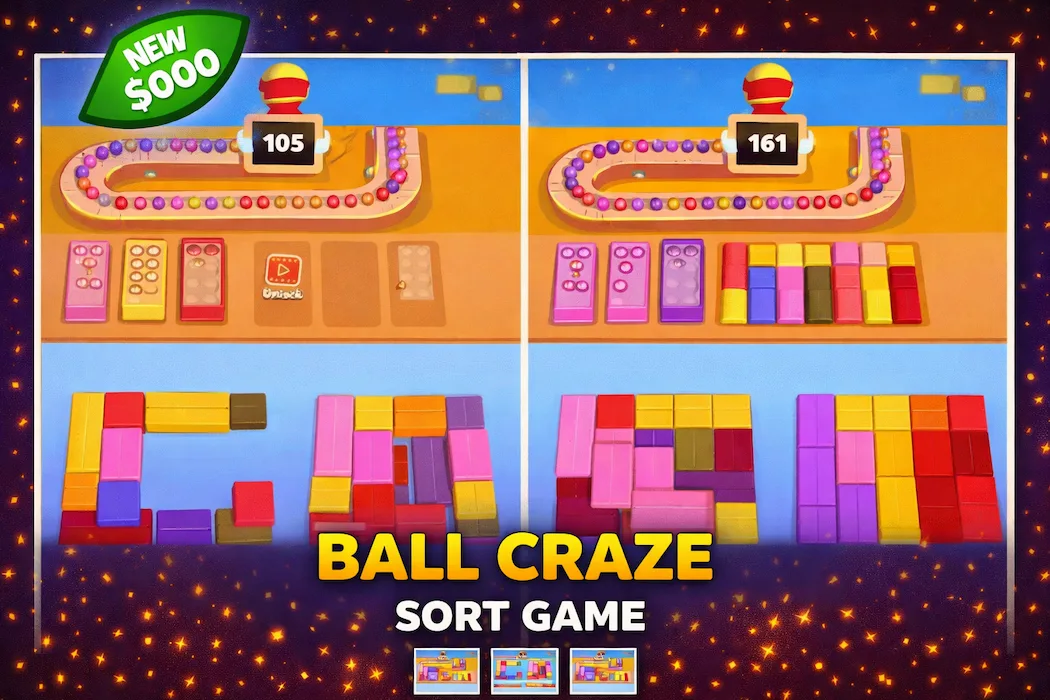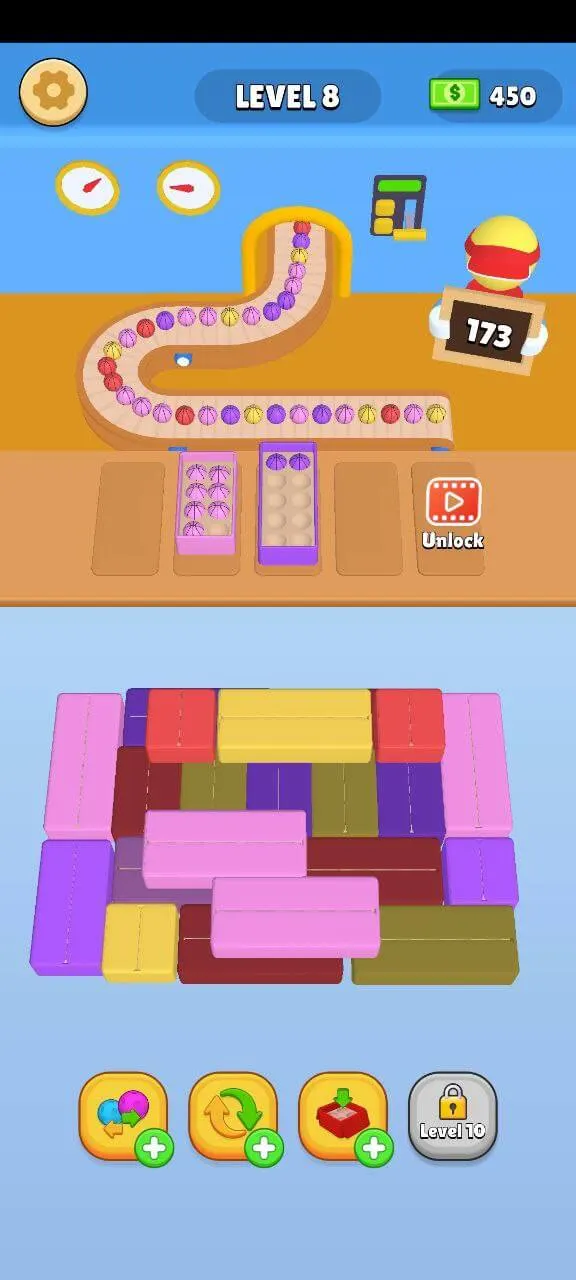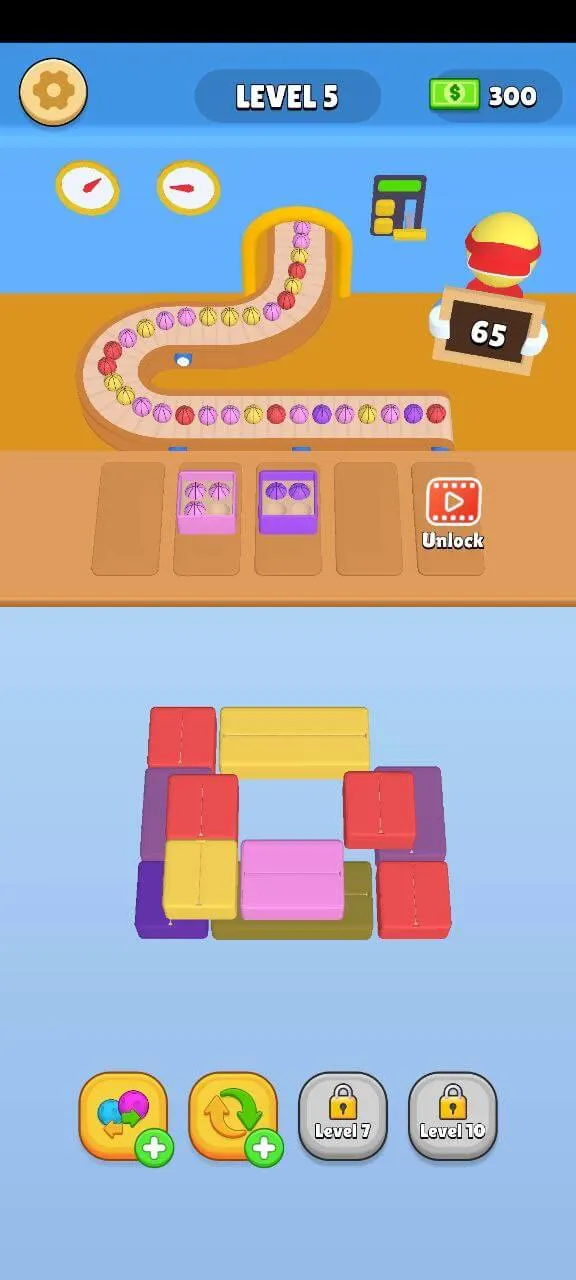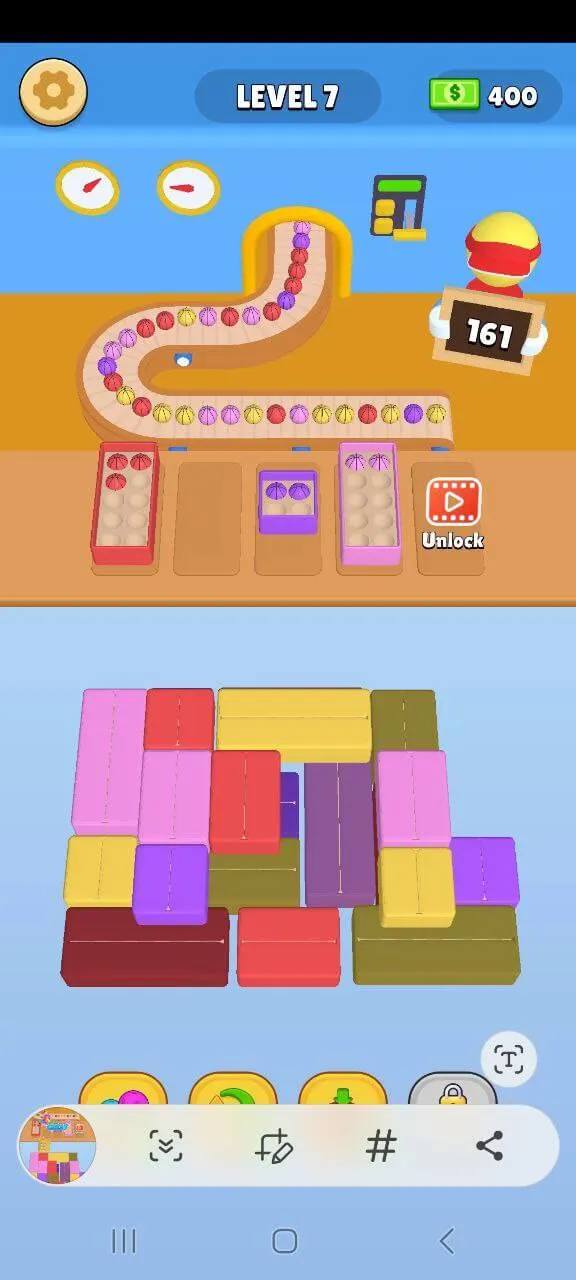

Not every successful mobile game needs speed, combat, or competition to keep players engaged. Some of the most consistently popular titles on the App Store and Google Play succeed because they do the opposite — they slow things down, remove pressure, and let players find satisfaction in simple, methodical progress. Ball Craze Sort is built entirely around that idea: turning basic color sorting into a calming, quietly addictive experience that players return to again and again.
This is a complete Unity color sorting puzzle source code, ready to reskin and publish for developers who want to tap into one of mobile gaming's most reliable casual categories. If you've been searching for a relaxing puzzle Unity template, a brain training game source code, or simply a low-stress mechanic that performs well across broad age demographics, this template gives you a finished, working foundation rather than an empty project file.
Sorting and organizing puzzles have quietly become one of the most dependable genres in casual mobile gaming — not because they're flashy, but because they tap into a deeply satisfying mental itch: turning visual disorder into order. Ball Craze Sort captures that feeling precisely, and this article breaks down exactly how the mechanic works, what's included in the source code, and how it fits into a broader Unity game template portfolio strategy.
Before getting into the feature breakdown, it's worth understanding why this genre keeps showing up near the top of casual game charts. Color sorting puzzles succeed because they deliver instant visual feedback with minimal cognitive overhead — players don't need a tutorial, don't need to memorize complex rules, and don't need fast reflexes. They just need to look at a cluttered arrangement and methodically restore order.
This makes the genre uniquely accessible across age groups and skill levels, which translates directly into a wider potential install base. It's a fundamentally different value proposition than fast-paced arcade titles like a Candy Pinball Unity game template, where precision and reflexes drive the experience. Sorting puzzles instead reward patience and planning — and that's precisely what makes them so replayable in short, frequent sessions throughout a player's day.
If you're new to building Unity projects and want a broader understanding of how different mechanic types are constructed, our practical walkthrough on how to make games in Unity is a useful companion resource — it covers the foundational workflow that applies whether you're working with a sorting puzzle, an arcade title, or anything in between.
At its core, Ball Craze Sort is about organizing chaos. Players are presented with a mixed arrangement of colored balls and must methodically restore order — one careful move at a time. Unlike fast-action genres, there's no penalty for thinking before acting, which fundamentally changes the emotional tone of the experience.
During gameplay, players consistently engage in:
This kind of structured, sequential thinking is what gives sorting puzzles their distinct mental engagement — every move has consequences for the moves that follow, creating a light but genuine strategic layer beneath an otherwise simple-looking interface.
The defining quality of Ball Craze Sort isn't complexity — it's the absence of unnecessary friction. There are no countdown timers pressuring decisions, no fail states punishing exploration, and no aggressive difficulty spikes that frustrate casual players. The loop is built entirely around simple actions leading to satisfying outcomes.
This "no pressure, just progress" design philosophy is exactly why relaxing progression-based puzzle games consistently perform well as daily-use apps. Players don't need to set aside dedicated gaming time — they can pick the game up for two minutes between tasks and still feel a sense of accomplishment when they put it down. That low-commitment, high-satisfaction loop is one of the strongest retention drivers available in the casual mobile category.
What initially looks like an extremely simple concept gradually reveals more depth as players progress. Early levels introduce the core mechanic with generous space and forgiving layouts. As players advance, complexity increases gradually — tighter spaces, more color variety, and arrangements that require genuine forward planning rather than trial and error.
Over time, players naturally develop:
This gradual, well-paced learning curve is critical to retention — it keeps players engaged without ever making them feel overwhelmed, which is a much harder design balance to strike than it might appear.
This is a complete, structured Unity project — not a partial prototype requiring significant additional development work. Developers receive:
✅ Full Unity source code, organized into clean, logically structured systems
✅ Color sorting and grouping mechanics, fully implemented and tested
✅ Progressive level design framework that scales difficulty smoothly over time
✅ Smooth visual feedback systems for correct sorts and completed levels
✅ Mobile-optimized performance, tuned for consistent play across device tiers
✅ Reskin-ready structure for colors, themes, and UI elements
✅ Cross-platform compatibility for both Android and iOS publishing
Because this is built using clean, well-organized C# scripts, developers — including those relatively new to Unity — can study and modify the project without needing to untangle a confusing codebase first.
One of the strongest practical advantages of this template is how quickly it can be reshaped into a distinct product. The customization path is intentionally simple:
Because the visual layer is cleanly separated from the underlying sorting logic, reskinning doesn't require touching core gameplay code — which means developers can realistically produce several visually distinct releases from a single codebase.
Color sorting games succeed for reasons that go beyond simple visual appeal. They tap into genuine psychological satisfaction mechanisms:
Players don't walk away from a sorting puzzle feeling stressed — they walk away feeling rewarded. That emotional outcome is precisely what drives the kind of habitual, low-friction daily engagement that makes this genre so commercially reliable.
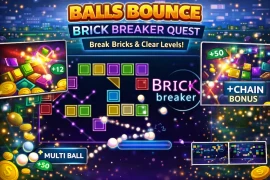
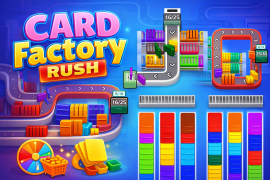
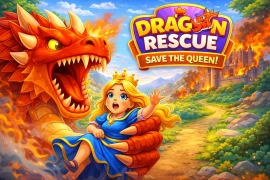
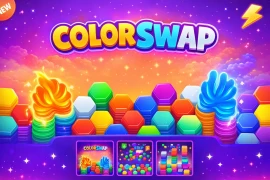
Few successful developers rely on a single title to carry their entire release strategy. Most build a varied catalog spanning different genres and pacing styles, both to widen their audience reach and to reduce dependency on any one game's performance. If Ball Craze Sort anchors your relaxing puzzle category, a few strong additions can round out a more complete release lineup:
Combining a calm, low-pressure title like this one with faster arcade titles and other puzzle variations gives your portfolio genuine breadth — capturing players looking for quick relaxation as well as those chasing a tighter skill challenge.
The development path for this template follows a straightforward sequence:
If you're newer to Unity development generally and want a clearer picture of the full build-to-publish pipeline — project setup, testing workflows, and platform requirements — our guide on how to make games in Unity walks through the process in more detail and pairs well with any reskin project like this one.
Ball Craze Sort suits a wide range of developers and use cases:
Ball Craze Sort proves that simple ideas, when executed with care, can create powerful and lasting player engagement. The sorting mechanic itself is easy to understand within seconds, yet the gradually increasing complexity gives it genuine staying power — something many casual puzzle templates fail to achieve.
With clean source code, a fully reskin-ready structure, and a proven gameplay loop built on relaxation rather than pressure, this template gives developers a strong foundation for a genuinely successful casual mobile release. With the right visual updates and a bit of creative direction, Ball Craze Sort can become a highly competitive entry in the sorting puzzle category.
Explore the full range of casual and puzzle titles on the Unity Source Code homepage to see how this template fits into the broader catalog.
Platform: Unity 6000 or higher
Need technical assistance? Reach out to the Unity Source Code support team for help with setup, customization, or publishing.
🌟🌟🌟🌟🌟 If this template helped you launch your game, a review goes a long way in helping other developers find it.
You need to login to comment!
Total Sold:
0
Total Comments: