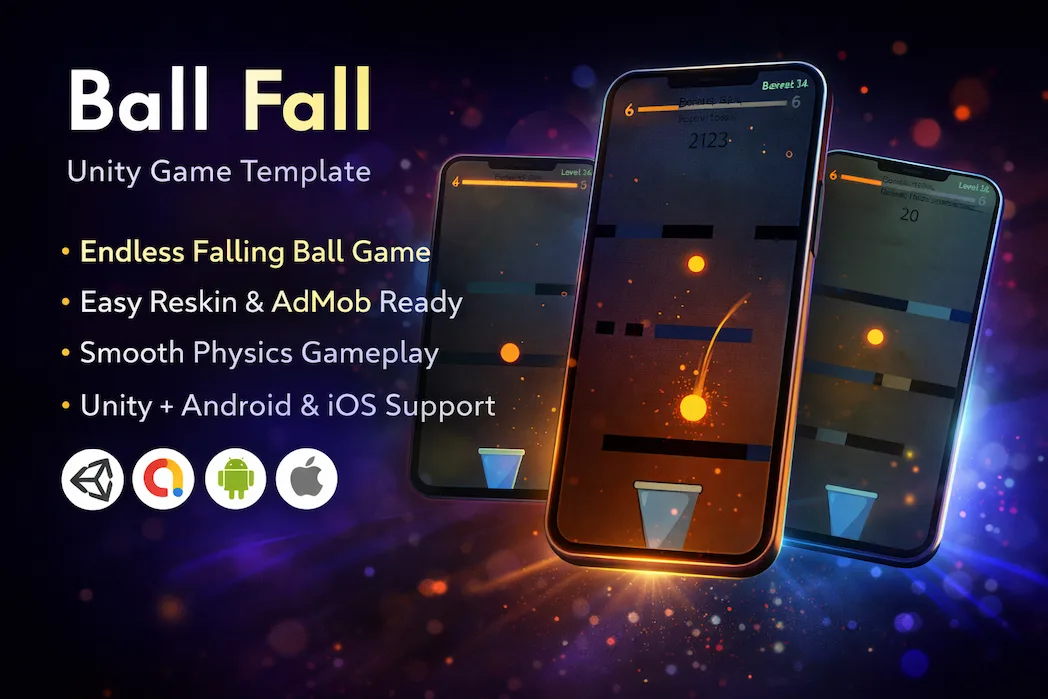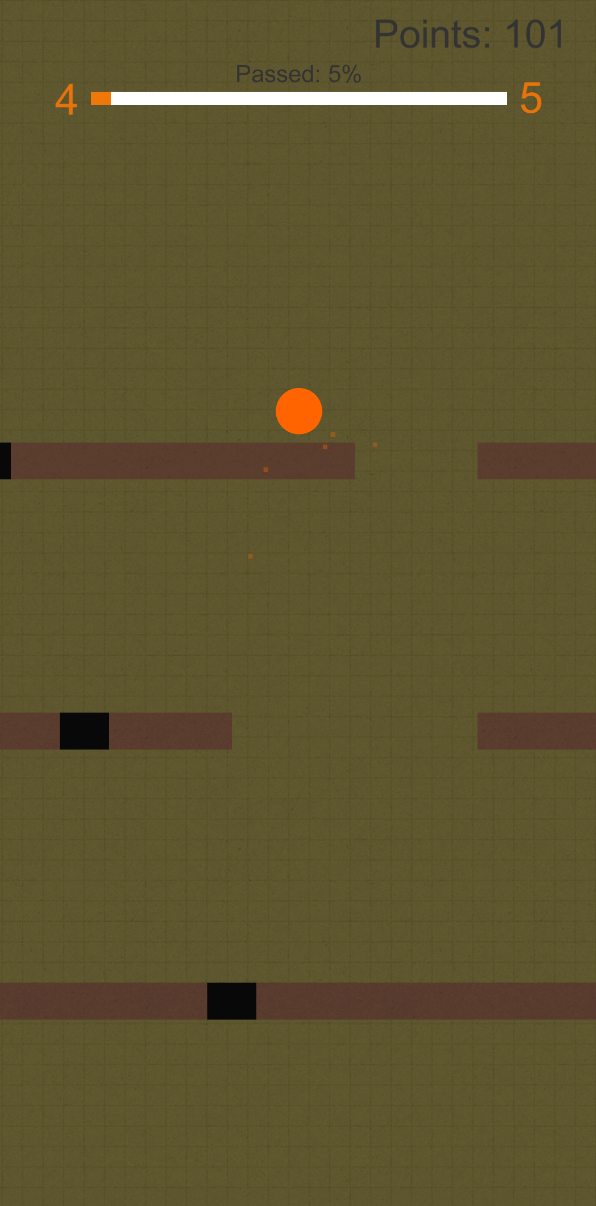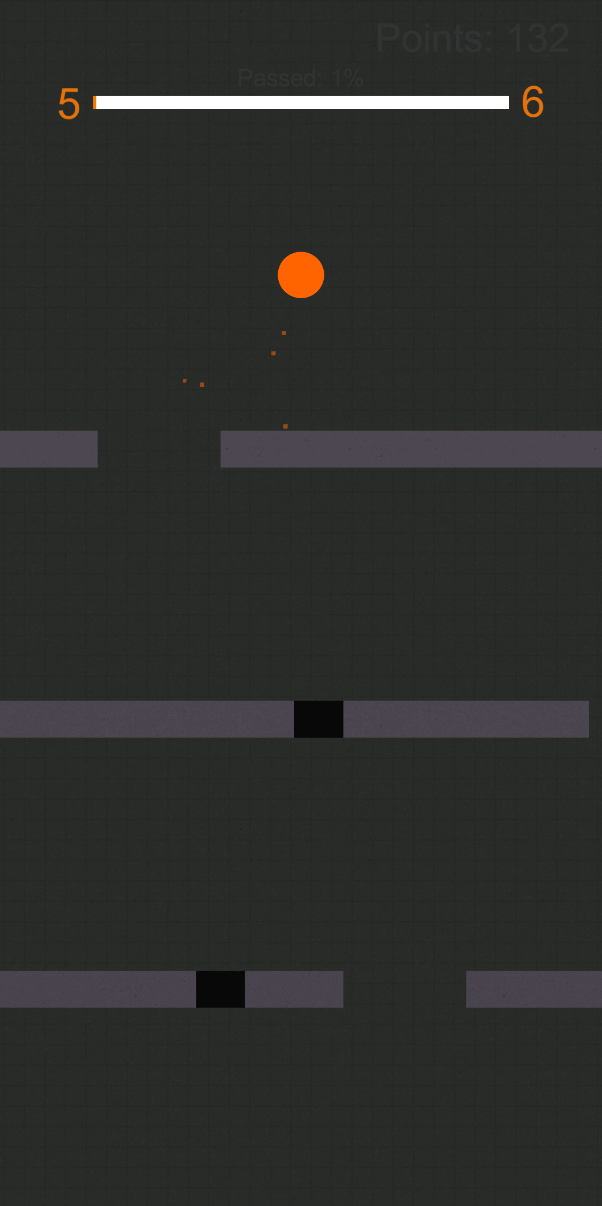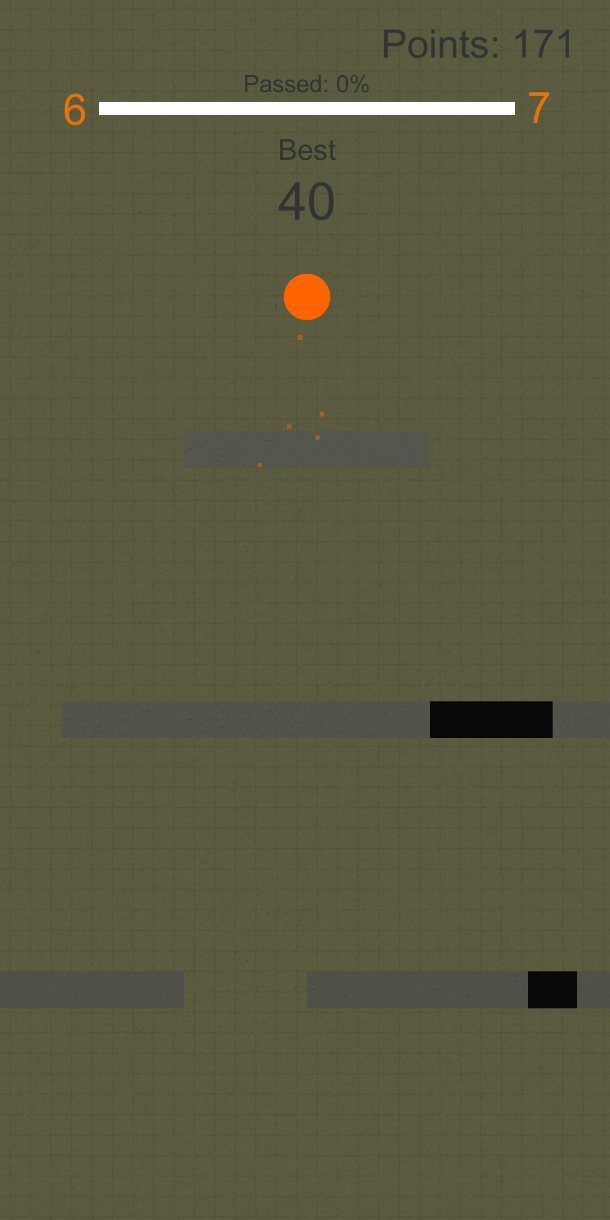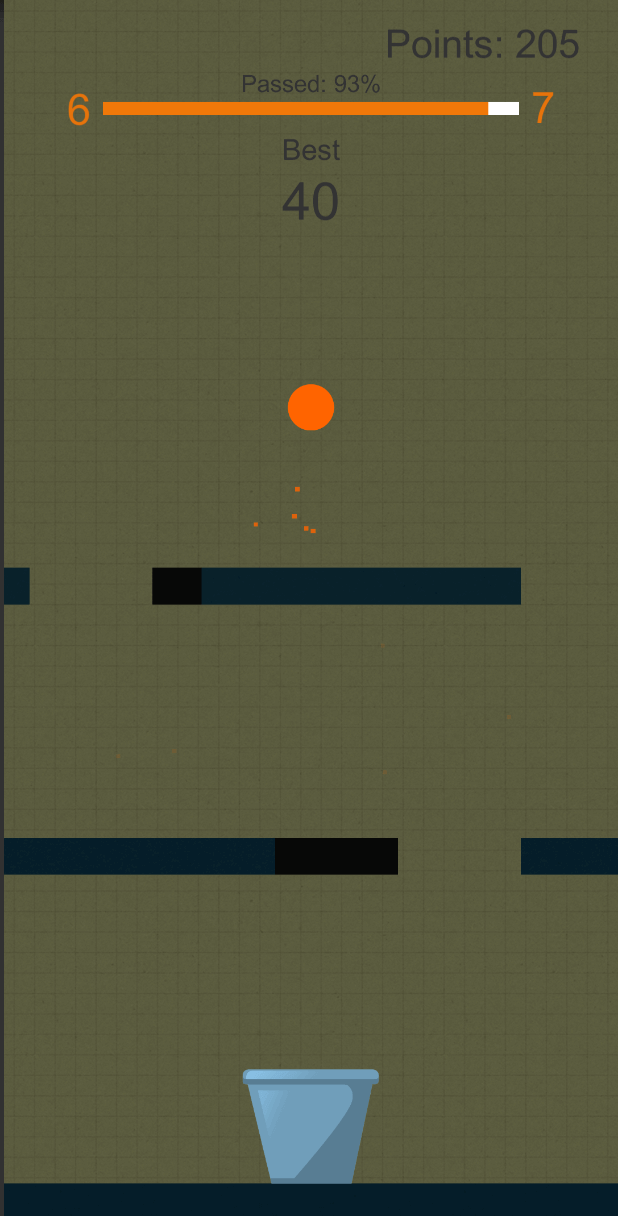

Gravity does most of the storytelling here. A ball drops, bounces, clips an edge, and either threads the gap or doesn't — and somehow that's enough to keep a thumb glued to the screen for twenty straight runs. The Ball Fall Physics Unity Game Template takes that simple, almost primal satisfaction of watching physics play out and turns it into a complete, publish-ready Unity hyper casual game source code.
No core mechanics to invent. No physics tuning starting from a blank scene. Just a working, polished foundation built around one idea executed properly: guide a falling ball through obstacles, reach the bottom, repeat.
There's a reason physics-based falling and bouncing games keep showing up near the top of casual charts — they're instantly readable. No tutorial, no menu maze, no explanation needed. The ball falls, you react, gravity does the rest. That immediacy is exactly what makes Unity hyper casual game templates built around physics so effective for fast organic growth: the first five seconds of gameplay sell the entire concept.
This template channels that same instant-readability into a genuinely well-built physics system, not just a rough placeholder dressed up with marketing copy.
At its core, it's refreshingly simple — and that's the point:
The loop repeats fast enough that a single failed run barely registers as a setback — it's already restarting before frustration sets in. That rapid retry cycle is one of the defining traits of genuinely sticky hyper casual design.
Good physics-based games live or die on feel, and this is where a lot of budget templates fall apart. This one doesn't. Every fall, bounce, and deflection is tuned to feel weighty and responsive rather than floaty or unpredictable, which means:
That sense of skill-based improvement — even in something this simple — is what separates a genuinely replayable game from a one-session novelty. It's the same design discipline behind puzzle titles like the Card Shifting Puzzle Unity Game Template – Ready to Publish & Monetize, where small, readable rule systems create surprisingly deep strategic depth over time.
A complete Unity build, structured to get you from import to publish with minimal friction:
✅ Full Unity source code, cleanly organized
✅ Physics-based ball falling mechanics, already tuned
✅ Smooth, responsive controls
✅ Both level-based and endless gameplay options
✅ Easy reskin paths for ball, obstacles, and environment
✅ Mobile-optimized performance
✅ Cross-platform support for Android and iOS
✅ Lightweight build for fast install conversion
✅ Ready for Play Store and App Store publishing
Reskinning a physics game well is about more than swapping colors — though that part's easy too. You can:
That last point matters more than it sounds like it should. Two games with identical obstacle art but different physics tuning can feel completely different to play — slower gravity feels meditative, faster gravity feels chaotic and arcade-like. Experimenting with those values is one of the highest-leverage customizations available in this template.
The biggest advantage of starting from a working template instead of an empty Unity project isn't just time saved — it's risk removed. Core physics tuning, mobile performance optimization, and cross-platform compatibility are already solved problems here. That leaves you free to focus entirely on:
Everything that actually differentiates your release from someone else's reskin of the same base template.
Physics-falling games pair surprisingly well alongside other genres in a multi-app strategy. If you're building toward a small portfolio rather than a single release, a few pairings worth considering:
A high-tempo survival driving title like Cars Survive 3D Unity Source Code – Addictive Car Survival Game shares the same "constant reflex pressure, instant restart" energy, just in a different setting — a natural cross-promotion partner for players who enjoy quick-session, skill-based games.
If you want to diversify into strategy or story-driven territory, Castle Story Game – Royal Match Puzzle & Kingdom Adventure Mobile Game offers a much slower, narrative-driven pace that balances out a portfolio dominated by fast reflex games — useful for retaining players who want something more contemplative between sessions.
For developers building out a strategy-genre app and needing strong interface design to match, the Castle Kingdom Season Game – Cartoon Strategy Battle Mobile Game UI is worth a look as a complete, ready-made UI system rather than a full gameplay template — handy if you're prototyping a kingdom-management concept alongside this one.
And if hybrid mechanics interest you, the runner-meets-merge structure of Chainsaw Head Run and Merge – Unity Hyper Casual Game Source Code shows how two simple systems can combine into something that feels fresh without abandoning hyper casual accessibility — a useful reference if you ever want to layer progression mechanics on top of this falling-ball foundation.
One of the most common mistakes developers make with falling-ball or physics-arcade games is ramping difficulty too aggressively, too early. Players who churn in the first thirty seconds rarely come back, no matter how good the physics feel later on. A few practical guidelines worth following as you build out levels:
Because the core physics in this template are already well-tuned, most of your difficulty design work is about pacing obstacle introduction rather than fighting unpredictable collision behavior — which is a much easier problem to solve.
Physics-heavy games are particularly sensitive to performance issues, since even minor frame drops during a fast-falling sequence can break the feel of a run instantly. A few areas worth paying attention to as you customize:
Because this template ships already optimized for mobile, most of this is about preserving that baseline through customization rather than fixing problems that didn't exist before you started.
This Unity template is approachable regardless of where you're starting from:
Beginners get a real, working example of physics-based gameplay structured cleanly enough to actually learn from — not just copy.
Indie developers can skip the weeks of physics tuning and mobile optimization that go into making a falling-ball game actually feel good, and move straight to branding and release.
Studios can use it as a reliable base for rapid-fire hyper casual releases, where speed to market often matters more than depth.
Freelancers get a dependable, fast-to-customize foundation that's easy to deliver to clients without rebuilding core physics from scratch every time.
If you want a broader view of how ready-made Unity templates compare across genres — and which categories tend to perform best for fast Android publishing — this breakdown of the best ready-made Unity games for Android is a useful companion read before deciding how to round out your release lineup.
The Ball Fall Physics Unity Game Template – Addictive Hyper Casual Source Code proves that a genuinely well-tuned physics system, paired with clean code and ready monetization, can carry an entire game on its own. There's no complicated story, no deep progression tree required — just gravity, obstacles, and the satisfaction of a clean run.
With smooth physics, flexible reskinning, and a structure ready for Android and iOS publishing, this template gives you a strong, low-friction starting point whether you're releasing your first hyper casual title or your fiftieth.
Requirements:
Current version: Unity 2019.4.22f1
Contact us on Team for technical help Team ID: Unity Source Code
Don't forget to review us!🌟🌟🌟🌟🌟
You need to login to comment!
Total Sold:
0
Total Comments: